


I stood in the drugstore aisle staring at CeraVe and Cetaphil for twelve to fifteen minutes.
Both had thousands of five-star reviews. Both claimed to be dermatologist-recommended. Both were around the same price. How was I supposed to choose?
I did what any reasonable person would do: I bought both and tested them for three or four months.
Here’s what I learned: They’re similar in many ways, but the differences matter depending on your skin type and what you need. One isn’t universally better – they’re better for different people.
If you’re standing in that same aisle wondering which to grab, this comparison will save you the $30 I spent testing both.
IN THIS ARTICLE
- ⚖️ The Basics: Side-by-Side Comparison
- 🧪💧 Ingredient Breakdown: What’s Actually Different
- ✋🧴 Texture & Feel: The Real-World Difference
- ⚙️📈 Performance: What Actually Works Better
- 👤🛡️ Who Should Choose CeraVe
- 👤🛡️ Who Should Choose Cetaphil
- 💧💧 The Extra Dry Versions: When Regular Isn’t Enough
- ❓ FAQ
- ⭐💭 Real User Experiences
- 🏷️🏷️ Price Comparison: Which is a Better Value?
- 🏅 My Personal Recommendation
Quick Answer: Which Should You Buy?
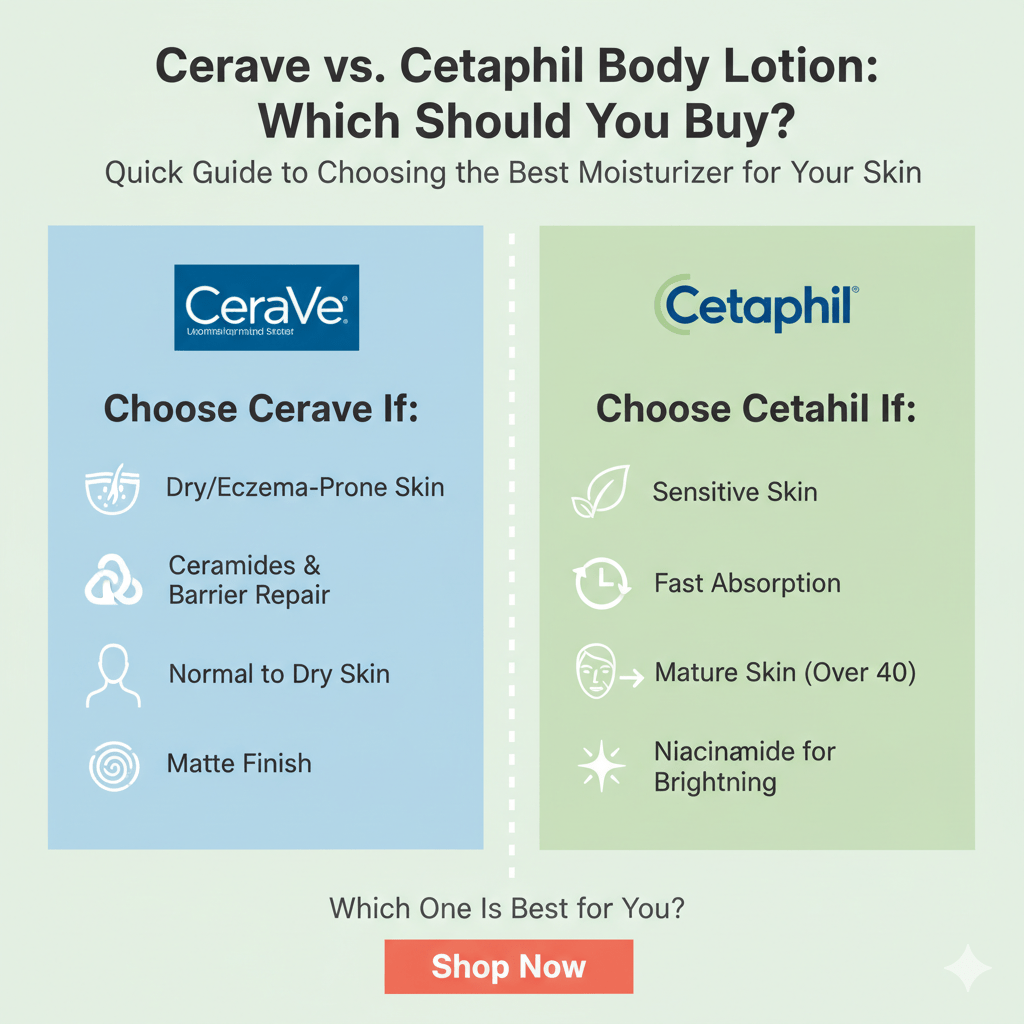
Choose CeraVe if:
- You have very dry or eczema-prone skin
- You want ceramides and barrier repair
- You’re under 35 with normal to dry skin
- You prefer a matte finish
Choose Cetaphil if:
- You have sensitive or reactive skin
- You want lightweight, fast absorption
- You’re over 40 or have mature skin
- You prefer niacinamide for brightening
Both are excellent. You can’t go wrong with either. But let’s break down exactly how they differ.
The Basics: Side-by-Side Comparison
| Product Name | CeraVe Daily Moisturizing Lotion | Cetaphil Face & Body Moisturizing Loton |
|---|---|---|
| Price | $15.62 for 19 oz | $12.79 for 20 oz |
| Rating | 4.7 stars (137,026 reviews) | 4.7 stars (13,762 reviews) |
| Key Ingredients | Ceramides, hyaluronic acid, MVE Technology | Niacinamide, glycerin, panthenol, avocado oil, sunflower oil |
| Best For | Dry skin, eczema, teens | All skin types, sensitive skin, adults |
| Texture | Creamy, matte finish | Lightweight, non-greasy |
| Notable | National Eczema Association accepted | 24+ hour hydration claim |
| Details | Click here to full review | Click here to full review |
At a Glance
Feature: CeraVe vs Cetaphil
Price $15.62 (19 oz) $12.79 (20 oz)
Price per oz $0.82 $0.64
Rating 4.7★ 4.7★
Reviews 137,000+ 13,700+
Fragrance Free: Yes
Comedogenic: Both are Non-comedogenic
Monthly Sales 70,000+/ 20,000+
Verdict on basics: Cetaphil is slightly cheaper per ounce. CeraVe has 10x more reviews (more proven).
Ingredient Breakdown: What’s Actually Different
CeraVe’s Star Ingredients
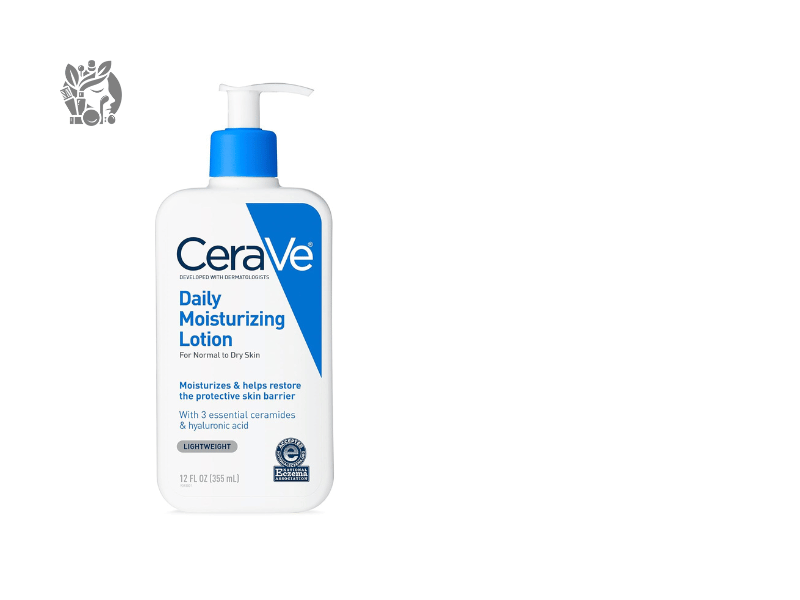
Ceramides (MVE Technology)
1. Critical for eczema and very dry skin
2.The main differentiator
Ceramides 1, 3, and 6-II repair
your skin barrier
3.MVE (MultiVesicular Emulsion)
releases ceramides
slowly over 24 hours
2. Hyaluronic Acid
1. Holds 1,000x its weight in water
2. Plumps and hydrates
Why this matters: CeraVe is formulated around barrier repair. If your skin barrier is damaged (eczema, very dry, irritated), ceramides are essential.
Cetaphil’s Star Ingredients
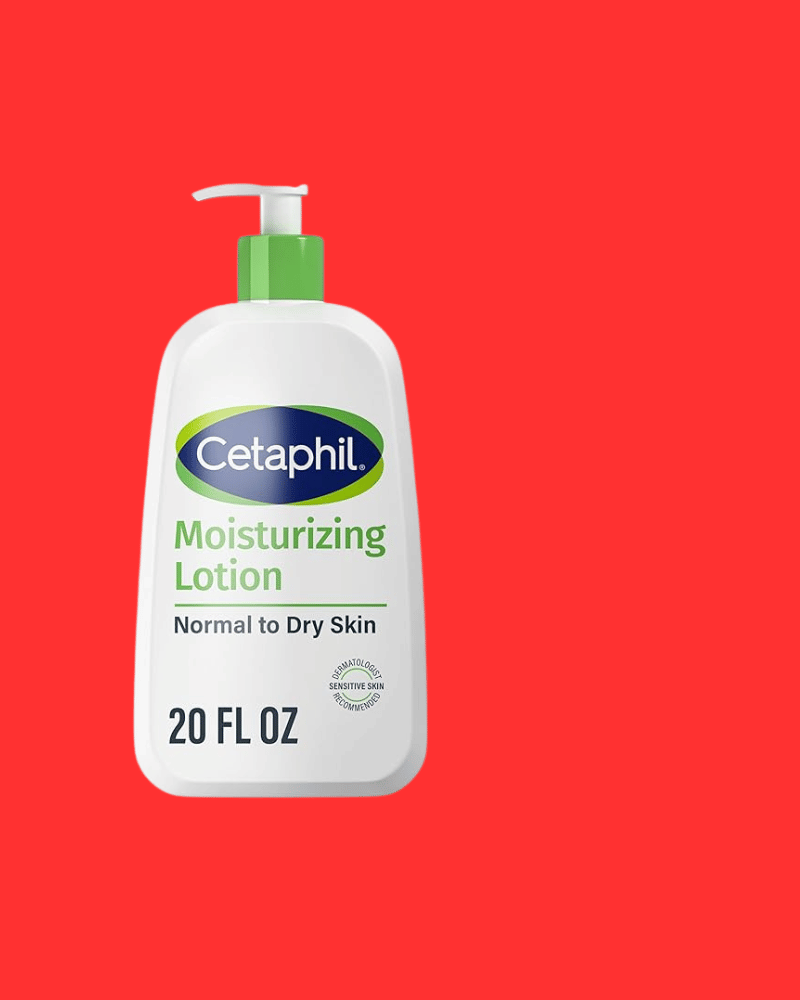
Niacinamide (Vitamin B3)
1.The main differentiator from CeraVe
2.Brightens skin tone
3.Reduces inflammation
4.Strengthens skin barrier
(different mechanism than ceramides)
2. Avocado Oil + Sunflower Oil
- Natural moisturizers
- Rich in vitamins A, D, and E
- Gentle and nourishing
3. Panthenol (Pro-Vitamin B5)
- Soothes and hydrates
- Anti-inflammatory
Why this matters: Cetaphil focuses on gentle, multi-benefit hydration. The niacinamide adds brightening and anti-aging benefits that CeraVe doesn’t have.
The Key Difference
CeraVe = Barrier repair specialist (ceramides)
Cetaphil = Gentle multi-tasker (niacinamide + oils)
Both hydrate well. The question is what else your skin needs.
Texture & Feel: The Real-World Difference
CeraVe Texture
Customer review (Joanna Priyanka, verified): “CeraVe moisturizing cream had a nice creamy consistency, giving you a matte finish.”
My experience:
- Thicker, creamier texture
- Takes 30-60 seconds to absorb fully
- Leaves a slightly matte finish
- Feels more substantial on skin
- Better for nighttime or winter
Best for: People who like feeling like they applied “real” moisturizer. Those with very dry skin who need that richness.

- [ DAILY MOISTURIZING LOTION ] Smooth, light-weight texture that is absorbed quickly, leaving skin feeling smooth and hyd…
- [ LONG-LASTING HYDRATION ] Contains Hyaluronic Acid to help retain skins natural moisture and MVE technology to provide …
- [ GENTLE ON SKIN ] Holds National Eczema Association (NEA) Seal of Acceptance. Fragrance free, allergy-tested, non-comed…
Cetaphil Texture
Customer review (DAN): “This is the only lotion that consistently soothes and hydrates without irritation.”
My experience:
- Lighter, more fluid consistency
- Absorbs in 15-30 seconds
- No residue or film
- Almost disappears into the skin
- Better for daytime or summer
Best for: People who want hydration without any heaviness. Those with sensitive skin who react to thicker formulas.
The Winner?
For texture preference, Cetaphil wins for most people. The lightweight feel is more versatile.
For hydration power, CeraVe wins for very dry skin. The richer texture delivers more intensive moisture.

- CETAPHIL FACE & BODY MOISTURIZING LOTION FOR ALL SKIN TYPES: Lightweight, fast absorbing, non-greasy body lotion that’s …
- INSTANTLY SOOTHES AND PROVIDES 48 HOUR HYDRATION: Immediately boosts skin hydration and continues to strengthen skin moi…
- IDEAL FOR USE ON THE ENTIRE BODY: Non-greasy, formula absorbs quickly and is excellent for hands, feet, elbows and knees
Performance: What Actually Works Better
Hydration Power
CeraVe:
- Deep, long-lasting hydration
- Better for very dry, flaky skin
- The MVE technology really does last 24 hours
- Repairs skin barrier over time (cumulative benefit)
Cetaphil:
- Claims 24+ hour hydration
- Works well for normal to dry skin
- Lighter feel but still effective
- Better for mild to moderate dryness
Verdict: For severe dryness, CeraVe is stronger. For normal needs, both work equally well.
For Eczema & Sensitive Skin
CeraVe:
- National Eczema Association accepted
- Ceramides specifically help eczema
- Many users report that it cleared their eczema flare-ups
- Fragrance-free, gentle formula
Cetaphil:
- Designed for sensitive/reactive skin
- Hypoallergenic formulation
- Customer feedback: doesn’t cause breakouts
- Less likely to sting or irritate
Verdict: CeraVe is better for eczema specifically. Cetaphil is better for general sensitive skin that’s not eczema.
For Face Use
Both claim to work on face and body, but:
CeraVe:
- Popular for facial use
- Non-comedogenic (won’t clog pores)
- Matte finish is good under makeup
- Many use it as a facial moisturizer
Cetaphil:
- Also non-comedogenic
- Lighter feels better for oily facial skin
- The niacinamide is a bonus for the face (brightening)
- Absorbs faster under makeup
Verdict: Both work for face. Cetaphil’s lighter texture and niacinamide give it a slight edge for facial use.
Absorption Speed
CeraVe: 30-60 seconds
Cetaphil: 15-30 seconds
Winner: Cetaphil for faster absorption.
Who Should Choose CeraVe
You’re a CeraVe person if:
✓ You have eczema or very dry, flaky skin
✓ Your skin barrier is damaged or compromised
✓ You want ceramide-based barrier repair
✓ You prefer richer, more substantial lotions
✓ You’re under 35 with dry skin
✓ You want proven results (137,000+ reviews)
✓ You like a matte finish
✓ You want National Eczema Association approval
CeraVe wins for:
- Very dry skin
- Eczema
- Barrier repair
- Winter/cold climate use
- Nighttime moisturizing
Who Should Choose Cetaphil
You’re a Cetaphil person if:
✓ You have sensitive or reactive skin (not eczema)
✓ You want lightweight, fast-absorbing moisture
✓ You prefer niacinamide for brightening benefits
✓ You’re over 40 or have mature skin
✓ You want something for the face and body
✓ You like minimal residue or feeling
✓ You want slightly better value ($0.64/oz vs $0.82/oz)
✓ You need 24+ hour hydration without heaviness
Cetaphil wins for:
- Sensitive (non-eczema) skin
- Lightweight hydration
- Face use
- Summer/warm climate
- Daytime moisturizing
- Mature skin (niacinamide benefit)
The Extra Dry Versions: When Regular Isn’t Enough
Both brands offer intensive versions for very dry skin. Here’s how they compare:
CeraVe Intensive Moisturizing Lotion
Price: $16.79 for 16 oz
Rating: 4.7 stars (2,730 reviews)
Key Ingredients: Hydro-Urea, shea butter, ceramides, MVE Technology
What makes it special:
- 2x increase in skin hydration with twice-daily use
- 42% increase in moisture barrier function
- Hydro-Urea technology for extra dry skin
- Non-greasy despite being intensive
Customer feedback: “Absorbs quickly without leaving a greasy feeling” and “helped clear up a rash.”
Best for: Winter dryness, extremely dry legs/elbows, rough/tight/itchy skin
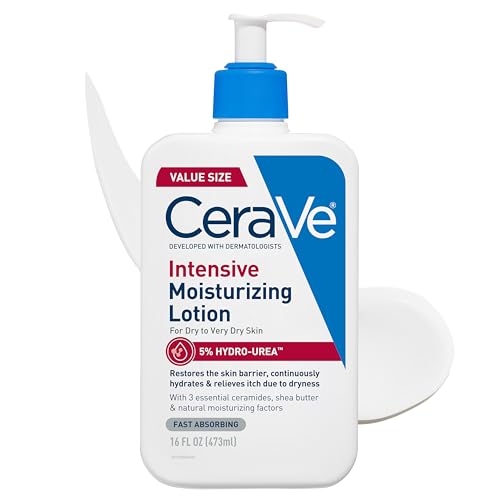
- [HYDRO-UREA]: NMF complex to hydrate deep within skin’s surface layers to help replenish skin’s natural moisturizing fac…
- [RICH LOTION, NON-GREASY]: Non greasy body lotion instantly absorbs with no greasy or sticky feel. Body, foot & hand lot…
- [MVE DELIVERY TECHNOLOGY]: Moisturizing lotion for extra dry skin with controlled release for long lasting hydration. 2X…
Cetaphil Intensive Healing Lotion
Price: $21.97 for 16 oz
Rating: 4.6 stars (13,435 reviews)
Key Ingredients: Ceramides, amino acids, allantoin
What makes it special:
- Specifically targets dry, rough, flaky skin
- 24-hour hydration claim
- Fragrance, paraben, and gluten-free
- Thicker formula than the regular version
Customer feedback: “Thicker than lotions and helps heal my hands faster!” and “significant improvement in overall hydration and texture.”
Best for: Chapped skin, healing dry patches, hands/feet, mature dry skin
Which Intensive Version to Choose?
CeraVe Intensive if you want:
- Faster absorption
- Non-greasy feel
- Hydro-Urea technology
- Better value ($1.05/oz vs $1.37/oz)
Cetaphil Intensive if you want:
- Thicker, more healing formula
- Amino acids + allantoin
- Specifically for flaky, rough skin
- More ointment-like texture
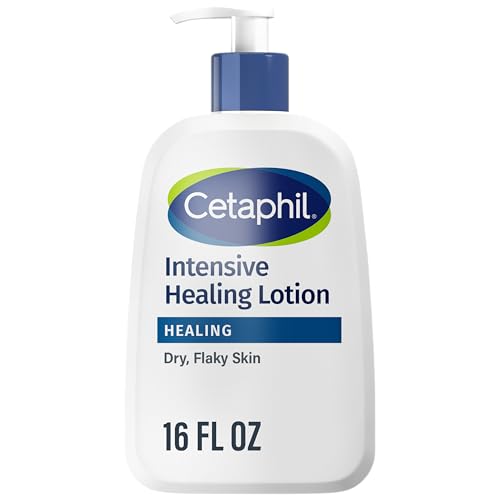
- CETAPHIL INTENSIVE HEALING LOTION WITH CERAMIDES: Specifically developed to hydrate and smooth rough, dry, flaky skin.
- 24-HOUR HYDRATION: Hydrates for a full 24 hours and should be used as a daily therapy to heal rough, dry, flaky skin.
- IDEAL FOR DAILY USE: Non-greasy, noncomedogenic formula won’t irritate skin or clog pores. Fragrance free, paraben free …
Common Questions: CeraVe vs Cetaphil
Q: Can I use both? One for face, one for body?
Absolutely. Many people use Cetaphil on their face (lighter) and CeraVe on their body (richer). Do what works.
Q: Which is better for combination skin?
Cetaphil. Lighter texture won’t feel heavy on oily areas while still hydrating dry areas.
Q: Which is better for winter?
CeraVe. Richer formula and ceramides provide better protection against cold, dry air.
Q: Which is better for after-shower use?
Both work. CeraVe if you prefer thicker. Cetaphil, if you want to dress faster (absorbs quicker).
Q: Do they smell?
Both are fragrance-free. CeraVe has a slight clinical/medicinal smell (not bad, just there). Cetaphil is more neutral/odorless.
Q: Which works better for kids?
CeraVe is marketed more toward teens, but both are safe for kids. CeraVe’s eczema acceptance makes it better for kids with eczema.
Q: Can I use either on my face?
Yes, both are non-comedogenic and safe for face use.
Q: Which lasts longer (value)?
Both last about the same with daily use (2-3 months for full body application). Cetaphil is slightly cheaper per ounce.
Q: Which do dermatologists prefer?
Both are dermatologist-recommended. CeraVe is more frequently mentioned for eczema—Cetaphil for general sensitive skin.
Real User Experiences
People Who Love CeraVe
“Makes skin feel like a newborn baby” – Common review theme
“Recommended by dermatologists, absorbs easily, and is free of perfumes and harsh chemicals” – Verified purchaser
“Nice creamy consistency giving you a matte finish” – Joanna Priyanka
Common praise: Effective for eczema, absorbs well, gentle formula, dermatologist-trusted
Common complaints: Some find it pricey, jar packaging not ideal, and a slight medicinal smell
People Who Love Cetaphil
“This is the only lotion that consistently soothes and hydrates without irritation” – DAN.
“Performs better than more expensive alternatives” – Value-conscious buyer
“Keeps skin hydrated for over 24 hours” – Multiple reviewers
Common praise: Gentle on sensitive skin, good value, no greasy feeling, scentless, works for 24+ hours
Common complaints: Some find pump packaging breaks, mixed opinions on thickness
Price Comparison: Which is a Better Value?
Regular versions:
- CeraVe: $15.62 for 19 oz = $0.82/oz
- Cetaphil: $12.79 for 20 oz = $0.64/oz
- Winner: Cetaphil (22% cheaper per ounce)
Intensive versions:
- CeraVe: $16.79 for 16 oz = $1.05/oz
- Cetaphil: $21.97 for 16 oz = $1.37/oz
- Winner: CeraVe (23% cheaper per ounce)
But consider:
- CeraVe has 10x more reviews (more proven)
- 70,000+ buy CeraVe monthly vs 20,000+ for Cetaphil
- Both are affordable drugstore options
Value isn’t just price – it’s results per dollar spent.
My Personal Recommendation
After three months using both:
I keep both in my bathroom.
Here’s when I use each:
CeraVe mornings (winter):
- Richer formula handles cold, dry air better
- Matte finish is good under clothes
- Ceramides provide all-day barrier protection
Cetaphil mornings (summer):
- Lighter feels better in heat/humidity
- Absorbs faster when I’m in a hurry
- No residue under clothes
CeraVe nights (always):
- Richer formula perfect for overnight repair
- Ceramides work while I sleep
- Worth the extra 30 seconds absorption time
Cetaphil face (always):
- A lighter texture is better under makeup
- Niacinamide brightening benefit
- Fast absorption
But if I could only choose ONE:
For most people: Cetaphil
More versatile, works for more situations, lighter feel, most prefer
For very dry/eczema skin: CeraVe
More intensive hydration, barrier repair focus, proven for eczema
The Bottom Line
You can’t go wrong with either.
Both are:
- Dermatologist-recommended ✓
- Fragrance-free ✓
- Non-comedogenic ✓
- Affordable ✓
- Effective ✓
- Trusted brands ✓
The real question isn’t “which is better?” but “which is better for YOU?”
Choose based on:
- Your skin type (very dry → CeraVe / normal-dry → Cetaphil)
- Texture preference (creamy → CeraVe / lightweight → Cetaphil)
- Specific needs (eczema → CeraVe / sensitive → Cetaphil)
- Age (under 35 → CeraVe / over 40 → Cetaphil with niacinamide)
Or do what I did: Buy both. Use CeraVe for the body, Cetaphil for the face. Use CeraVe in winter, Cetaphil in summer.
At $13-16 each, you can afford both. Your skin will thank you.
Still can’t decide? Flip a coin. Seriously. Both are excellent. You’ll be happy with either one.
Have you tried both? Which do you prefer and why? Drop a comment below – I’d love to hear your experience!
Leave a Reply