

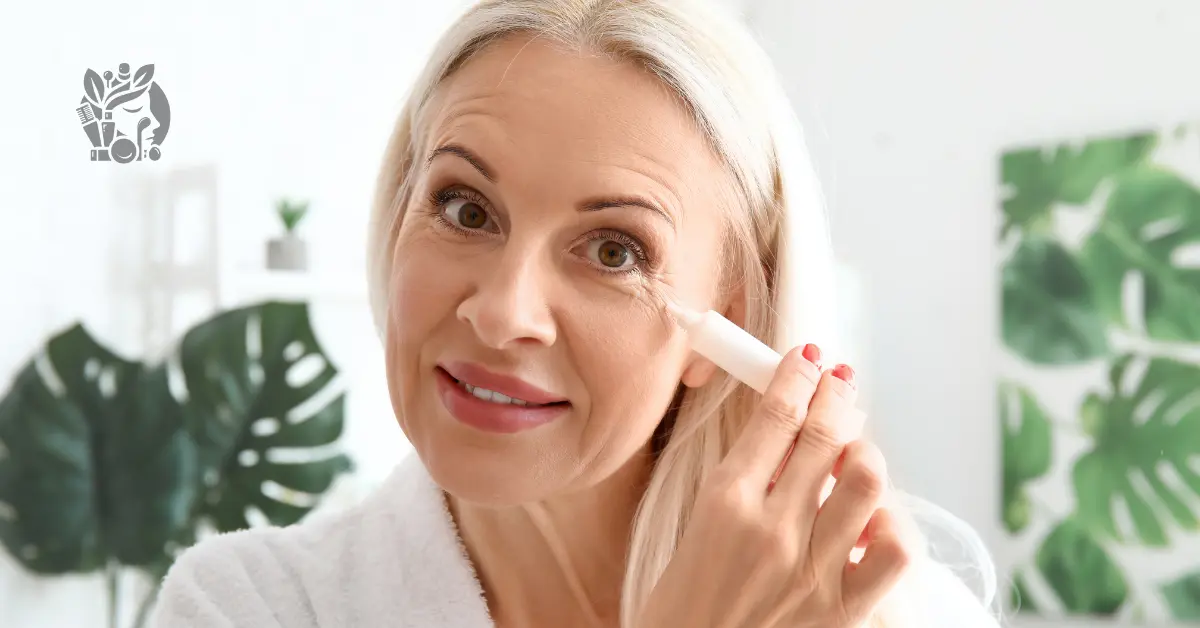
There’s a very specific kind of frustration that shows up sometime after 45.
You apply your eye cream religiously. You drink the water. You even upgrade your concealer.
And still… the mirror says tired.
Not just “I didn’t sleep well” tired. Deeper than that. Shadows that look bluish one day, brownish the next. Puffiness that wasn’t there before — or shows up out of nowhere after a salty dinner, a stressful week, or honestly, no clear reason at all.
Here’s what no one really explains clearly: your under-eye area didn’t suddenly “get worse.” It changed.
Perimenopause quietly shifts everything — collagen drops, skin gets thinner, circulation slows, and fat pads that once kept everything smooth start to migrate or shrink. So the same eye cream that worked at 35? It just doesn’t hit the same anymore. It was built for different skin.
This isn’t just an eye-area issue — it’s part of a much wider shift that menopause causes across your entire skin. Our guide to why skin changes during menopause explains the science behind all of it, including exactly why the eye area is one of the first places to show the effects.
And that’s where most “best eye cream” lists miss the mark entirely. They recommend one-size-fits-all solutions for a problem that’s actually layered — because dark circles after 45 aren’t one thing. They’re three or four different things wearing the same face.
So instead of throwing 20 products at you and hoping one sticks, let’s slow down for a moment. Let’s understand what’s actually happening under your eyes — and then match it with what genuinely works.
& Puffiness After 45
Why Dark Circles Get Worse After 45
(The Estrogen, Collagen & Thinning Skin Shift You Can Actually See)
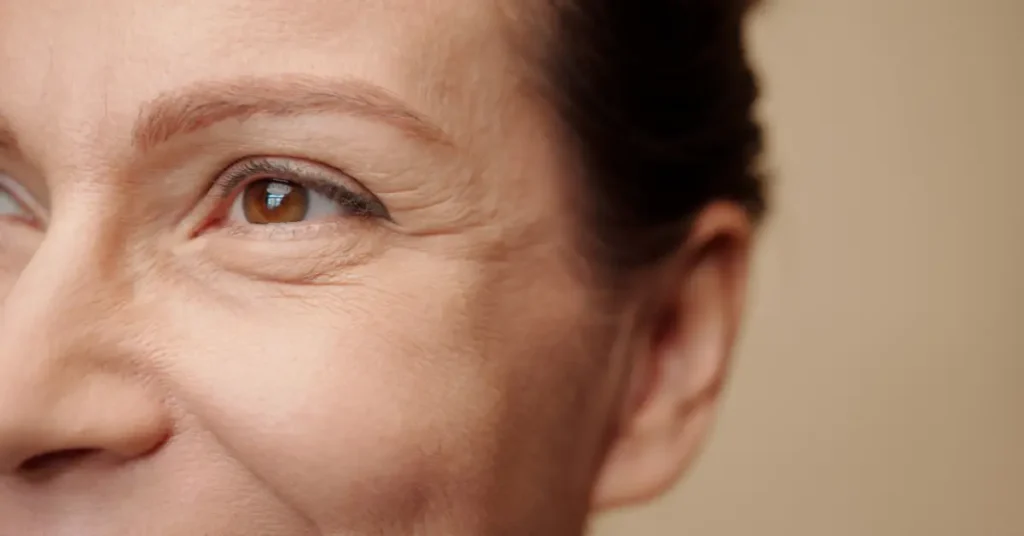
If you’ve noticed your under-eye area looking more shadowed, hollower, or just generally more tired than it used to — even when you’re well-rested — you’re not imagining it. And it’s not a skincare failure. It’s biology.
Here’s what’s actually happening beneath the surface during perimenopause:
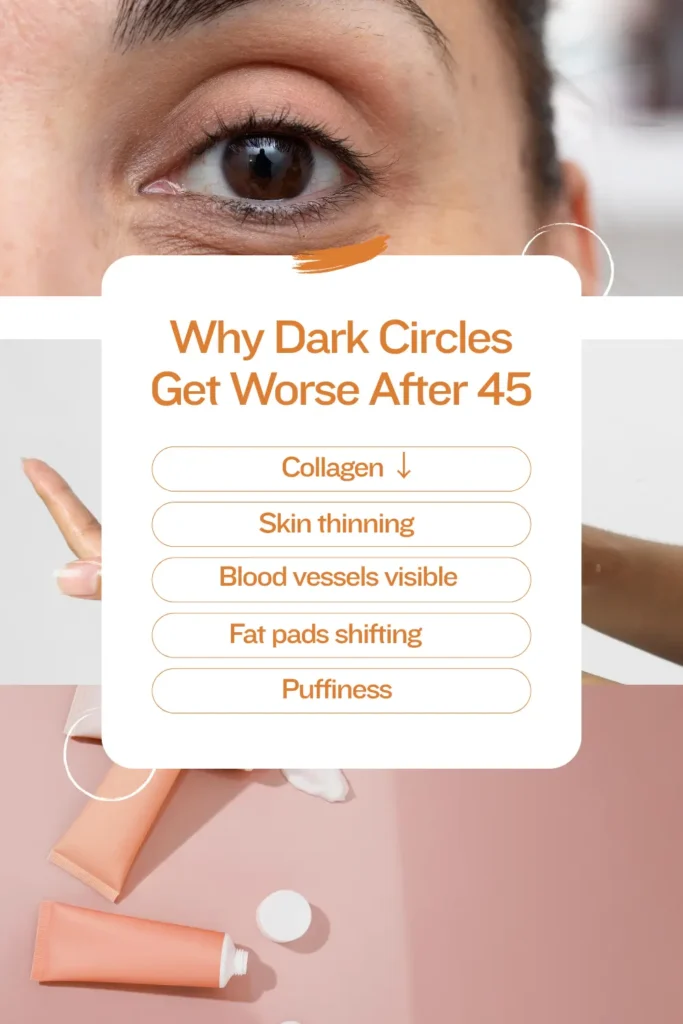
Collagen production slows down. Estrogen plays a direct role in collagen synthesis, and as levels begin to drop during perimenopause, collagen loss can accelerate. Under the eyes—where skin is already the thinnest on the face—that change becomes visible quickly. Less collagen means less structural support, so the skin sits closer to what’s underneath it: blood vessels, fat, and bone.
These same changes — slower collagen production, reduced circulation, a weakening barrier — also affect how bright and radiant your overall complexion looks. If you’re working on your full-face glow alongside the under-eye area, our guide on how to get natural glow on face covers 12 methods that address exactly these root causes.
Supporting collagen from within — through collagen peptides and omega-3 supplements — can help slow this thinning. See our guide to supplements for menopause itchy skin for the full evidence-backed breakdown.
Skin becomes more transparent. As the dermis thins, it loses its opacity. Blood vessels that were previously hidden beneath a plumper layer of skin become visible — and that’s exactly what creates the bluish or purplish tone that many women start noticing in their 40s. This isn’t darkness on the skin. It’s darkness through it.
Fat pads shift and hollow out. The under-eye area is supported by small fat pads that act like cushions. During perimenopause, these pads can migrate downward or shrink, creating a hollow area called the tear trough. Tear troughs cast a shadow that no eye cream can fully eliminate — because it’s structural, not topical. (More on this below.)
Circulation slows. Circulation can become less efficient with age, which may make under-eye discoloration appear darker or more persistent. This can contribute to a duller, more shadowed look that often accompanies vascular darkness. This is separate from the vascular blueness described above — and it responds to different ingredients.
Puffiness becomes more persistent. With a compromised skin barrier and slower lymphatic drainage, fluid retention under the eyes becomes more common and harder to shift. That “pillow face” you wake up with at 50 that wasn’t there at 35? This is why.
The key insight here is that these changes stack — which is why the under-eye area after 45 often looks like multiple problems at once. Because it frequently is.
Types of Dark Circles — And Why the Type Determines the Treatment
(This Is Where Most Eye Cream Advice Goes Wrong)
Most eye cream roundups skip this section entirely. They list products without ever asking: what kind of dark circles do you actually have? It’s the most important question — because treating a structural shadow with a vitamin C brightener is like putting concealer on a bruise. It might mask it slightly, but it’s not addressing the real issue.
Here’s how to identify your type in the mirror:
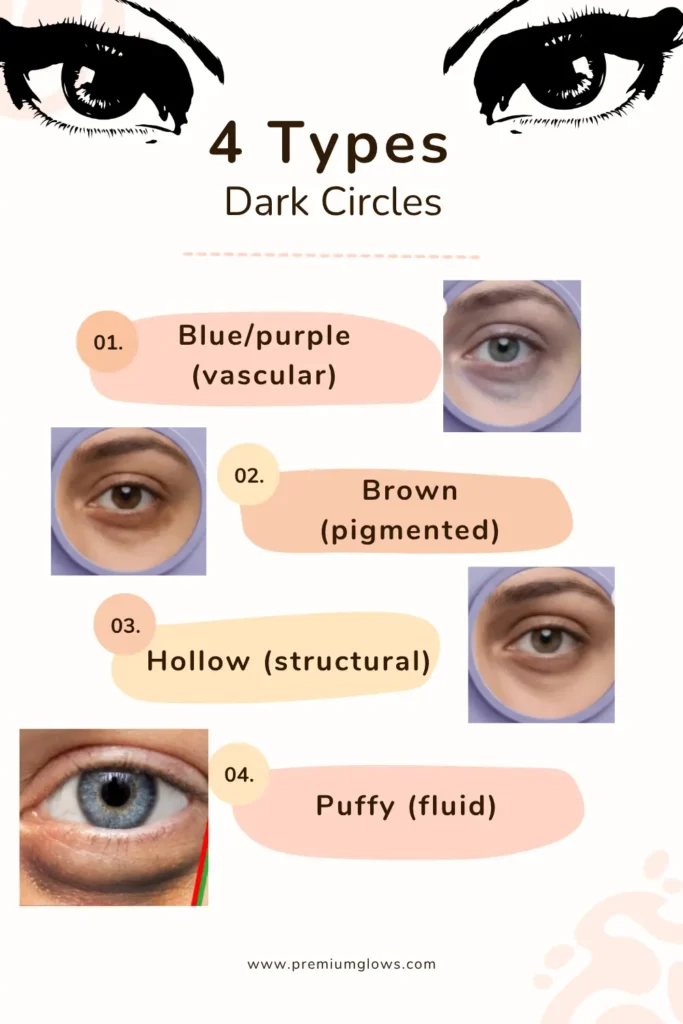
Type 1: Vascular (Blue or Purple Tones) Look at your under-eye area in natural light. If the darkness has a bluish or purplish tint, you’re likely dealing with vascular darkness — blood vessels showing through thinning skin. This is the most common type in perimenopausal women.
What helps: Caffeine (constricts blood vessels temporarily), retinol or bakuchiol (thickens the dermis over time so vessels become less visible), and peptides that support collagen rebuilding.
Type 2: Pigmented (Brown Tones) If the darkness is warm — brown, tan, or amber — it’s more likely pigmentation from sun exposure, post-inflammatory hyperpigmentation, or melanin overproduction.
What helps: Vitamin C (inhibits melanin production), niacinamide (brightens and evens tone), and consistent SPF (prevents further pigment darkening). For long-term fading, pairing your eye cream with a niacinamide serum for dark spots can make a meaningful difference.
Type 3: Structural (Shadows from Hollowing) This one requires the most honesty: if your darkness is caused by a hollow tear trough — a depression where the under-eye meets the cheek — no topical product will fully correct it. The shadow is cast by the indentation itself, not by pigment or blood vessels.
What helps: Hyaluronic acid-rich eye creams can temporarily plump the area and reduce the appearance of hollowing. Longer term, many women explore dermal filler for the tear trough. A good illuminating or color-correcting concealer layered after eye cream can also minimize the appearance significantly.
Type 4: Puffiness and Fluid Retention Morning puffiness that deflates by noon is usually fluid retention. Persistent puffiness that doesn’t fully resolve is more likely related to fat pad changes or lymphatic sluggishness.
What helps: Caffeine (reduces puffiness acutely), cooling application techniques (chilled eye cream or jade roller), and peptides for longer-term firming. Sleeping with your head slightly elevated also helps drain fluid overnight.
Quick self-check: Press gently on your under-eye darkness with one finger. If it temporarily lightens when pressed, it’s vascular. If it doesn’t change much, it’s likely pigment or structural. If the area feels puffy and soft, fluid retention is a factor.
Most women over 45 will have a combination of types — which is why the best approach is an eye cream with multiple active ingredients rather than a single-ingredient solution.
What Ingredients Actually Work (And What’s Just Marketing)
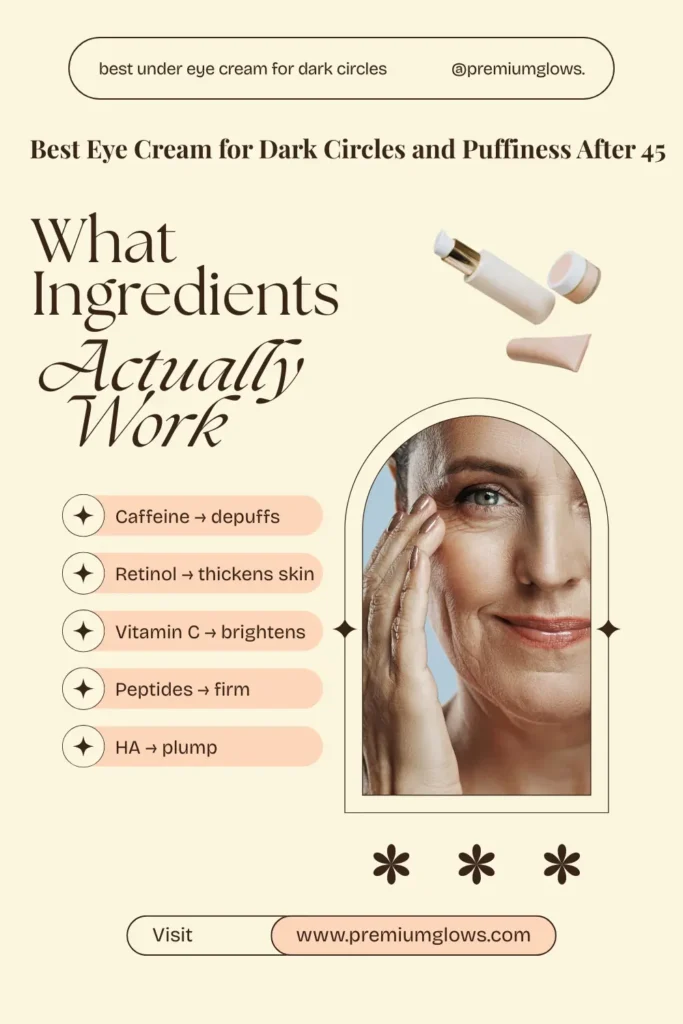
(Because Not All “Eye Creams” Are Built for Mature Skin)
The eye cream aisle is full of impressive-sounding claims. Here’s what the evidence actually supports — and what to prioritize based on your dark circle type.
Caffeine — for puffiness and vascular darkness One of the most well-supported ingredients in eye care. Caffeine constricts blood vessels temporarily, which reduces both puffiness and the blue-toned appearance of vascular dark circles. It works best applied in the morning when puffiness and circulation are at their worst. Look for it listed in the top half of the ingredient list for meaningful concentration.
Retinol — for skin thinning and fine lines Retinol is the gold standard for building collagen and thickening the dermis over time. Thicker skin = less visible blood vessels = less vascular darkness. It also improves the appearance of fine lines around the eyes. The catch: the under-eye area is sensitive, and some women find retinol irritating, especially during perimenopause when skin reactivity increases. Start with a low concentration and use only at night.
Bakuchiol — the gentler retinol alternative For women who find retinol too harsh, bakuchiol delivers similar collagen-stimulating benefits with significantly less irritation potential. Our best bakuchiol eye creams guide covers the best options specifically for mature, sensitive skin.
Vitamin C — for pigmented darkness and brightness Vitamin C inhibits the enzyme that triggers melanin production, making it the most targeted treatment for brown, pigmented dark circles. It also brightens the overall under-eye area by improving skin radiance. Look for stabilized forms (ascorbyl glucoside, sodium ascorbyl phosphate) in eye cream formulations — these are more stable and less irritating than pure L-ascorbic acid in such a delicate area.
Peptides — for firmness and structural support Peptides are short chains of amino acids that signal the skin to produce more collagen and elastin. They won’t produce overnight results, but used consistently over months, they genuinely improve the firmness and texture of the under-eye area. Look for matrixyl (palmitoyl pentapeptide-4) or argireline in the ingredient list.
Hyaluronic acid — for plumping and dewy texture Hyaluronic acid draws moisture into the skin and temporarily plumps fine lines and hollow areas. It’s more of a cosmetic benefit than a treatment, but for the immediate look of well-rested, hydrated under-eyes — especially before applying concealer — it makes a real difference.
Niacinamide — for brightening and barrier support Niacinamide brightens skin tone, reduces the appearance of pigmentation, and strengthens the skin barrier. It’s also one of the most well-tolerated ingredients for sensitive perimenopausal skin. A strong all-rounder.
A note on texture: Eye cream textures matter more than most guides admit.
- Gels absorb quickly and are best for morning use and puffiness-prone skin
- Creams are richer and better for dry, mature skin — especially for nighttime
- Balms provide the most intensive hydration but can feel heavy; best for very dry skin or overnight use
How We Chose These Eye Creams
We evaluated each formula based on:
- Ingredient efficacy for dark circles/puffiness
- Suitability for mature/perimenopausal skin
- Texture compatibility under makeup
- Irritation risk for sensitive under-eyes
- Real-world consumer reviews and editor testing
- Overall value for price

The 10 Best Eye Creams for Dark Circles and Puffiness After 45 (2026)
(Curated for Real Results on Perimenopausal Skin)
Quick Comparison Table
| # | Eye Cream | Best For | Key Ingredients | Texture | Price Range |
|---|---|---|---|---|---|
| 1 | RoC Retinol Correxion | Best Overall | Retinol, mineral complex | Lightweight | Mid |
| 2 | Neutrogena Rapid Dark Circle Repair | Best Budget | Retinol, HA | Lightweight cream | Budget |
| 3 | Ole Henriksen Banana Bright+ Eye Crème | Pigmented Dark Circles | Vitamin C, collagen | Whipped cream | Mid |
| 4 | Sunday Riley Auto Correct | Vascular Dark Circles | Caffeine, brightening pigments | Silky cream | Mid |
| 5 | Shiseido Benefiance | Comprehensive Wrinkle Correction | WrinkleResist24 technology | Lightweight | Budget |
| 6 | La Mer Eye Concentrate | Luxury Overall | Miracle Broth, peptides | Gel-cream | Luxury |
| 7 | Olay Eyes Pro-Retinol | Budget Retinol | Retinol B3 complex | Cream | Budget |
| 8 | First Aid Beauty Eye Duty Triple Remedy | Sensitive Skin | Niacinamide, peptides, caffeine | Balm | Mid |
| 9 | Peter Thomas Roth Potent-C Power Eye Cream | Brightening + Pigment | Vitamin C 10%, HA | Cream | Mid-Luxury |
| 10 | Drunk Elephant C-Tango Eye Cream | Clean Beauty | 5 CEF complex, peptides | Lightweight cream | Luxury |
1. RoC Retinol Correxion Under Eye Cream for Dark Circles & Puffiness — Best Overall for Mature Skin
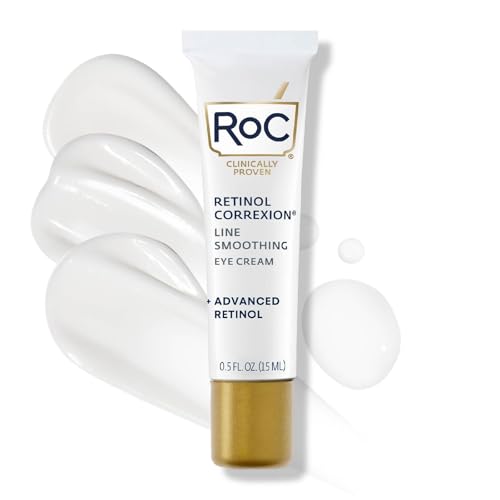
If you could only put one eye cream on a “best overall” list for women over 45, and you had to back it with real-world evidence, this would be it.
With over 33,000 Amazon reviews and a #2 ranking in Eye Treatment Creams, the RoC Retinol Correxion Under Eye Cream has earned its reputation through decades of consistent results — not marketing. It directly targets the four concerns that matter most for perimenopausal skin: dark circles, puffiness, fine lines, and wrinkles. All in one formula. At a price point that doesn’t require a second thought.
The formula is built around RoC’s retinol complex alongside a mineral-rich base that buffers irritation — which matters enormously for skin that’s become more reactive during perimenopause. Retinol is the most clinically backed ingredient for rebuilding collagen and thickening the dermis over time, which addresses the core reason dark circles worsen after 45: skin getting thin enough for blood vessels and shadows to show through. The hypoallergenic formula also makes it a practical choice for women with newly sensitive skin.
It’s suitable for both women and men, works on dry skin types, and the 0.5oz tube lasts longer than most eye creams in this category.
Why it works for 45+ skin: Retinol targets the structural thinning at the root of most perimenopausal dark circles while the mineral complex prevents the irritation that retinol can cause on more reactive skin. Add hyaluronic acid for immediate plumping and you have a formula that works on multiple levels simultaneously — acutely and over time.
Best for: Dark circles, puffiness, fine lines, wrinkles — all-round daily treatment
Skin type: Dry, sensitive, all types
Texture: Cream
Check price & reviews on Amazon
2. Neutrogena Rapid Dark Circle Repair Eye Cream — Best Budget Pick

At under $20, this conceals and treats simultaneously — a rare combination at this price point.
The formula combines retinol with hyaluronic acid and a brightening complex, targeting both the structural thinning that causes vascular darkness and the surface dullness that makes dark circles look worse. Women with mature skin consistently praise it for delivering visible brightening within a few weeks of consistent use — notably faster than most retinol eye creams claim.
The texture is lightweight enough to work under makeup, which makes it a practical morning option for women who don’t want to maintain a separate AM and PM eye cream.
Why mature skin loves it: Retinol begins the long-term work of thickening thinning skin while hyaluronic acid provides immediate plumping. The combination means you see some fast results while the retinol does its slower, deeper work.
Best for: Budget-friendly dark circle treatment, beginners with retinol
Texture: Lightweight cream
Check price & reviews on Amazon
3. Ole Henriksen Banana Bright+ Eye Crème — Best for Pigmented (Brown) Dark Circles

Named for the banana-yellow color correcting principle that makeup artists have used for decades, this eye cream is the most targeted option on this list for women whose darkness skews brown or warm-toned.
The formula is built around vitamin C and collagen, with a subtle optical brightening effect that works both topically (immediate brightness) and over time (melanin suppression with consistent use). Women with perimenopausal skin particularly appreciate that it’s fragrance-free — a significant plus given how reactive skin can become during hormonal shifts.
The whipped cream texture feels luxurious without being heavy, and it absorbs cleanly without pilling, making it a strong pre-makeup option.
Best suited for perimenopausal under-eyes because Vitamin C targets pigmentation specifically, while collagen supports the structural thinning that makes all dark circles more pronounced. Fragrance-free formula reduces irritation risk on reactive perimenopausal skin.
Best for: Brown/warm-toned dark circles, pigmentation, brightening
Texture: Whipped cream
Check price & reviews on Amazon →
4. Sunday Riley Auto Correct Brightening and Depuffing Eye Contour Cream — Best for Vascular (Blue/Purple) Dark Circles

If your under-eyes look more blue, purple, or shadowy than brown, and the darkness tends to come with morning puffiness, Sunday Riley Auto Correct is one of the most targeted formulas you can buy for that specific combination.
The formula is built around caffeine and light-reflecting brighteners, which means it tackles vascular darkness from two angles: first by helping temporarily reduce the look of puffiness and pooled fluid, and second by immediately making the under-eye area appear more awake and reflective. The result is a faster visible payoff than many treatment-focused eye creams that take weeks to show anything at all.
What makes it especially appealing for mature skin is the texture: it has that silky, cushiony cream feel that hydrates enough for drier under-eyes without becoming greasy or causing concealer to slide. It gives the under-eye area a fresher, lifted look almost immediately—which is why so many women use it as both skincare and a pre-makeup prep step.
It’s not the best choice if your darkness is primarily brown pigmentation or deep structural hollowing, but for blue-toned darkness paired with puffiness, few formulas perform as quickly.
Why it works for 45+ skin:
Vascular dark circles become more noticeable as under-eye skin thins during perimenopause. The caffeine helps de-puff and visually tighten the area, while the brightening pigments create an immediate “well-rested” effect that mature skin often benefits from before makeup.
Potential downside:
This formula contains fragrance, so women with very reactive or easily irritated under-eyes may prefer a fragrance-free alternative.
Best for: Blue/purple vascular darkness, morning puffiness, pre-concealer brightening
Texture: Silky cream
Check price & reviews on Amazon
5. Shiseido Benefiance Wrinkle Smoothing Eye Cream — Best for Comprehensive Wrinkle Correction

Most eye creams pick one or two wrinkle concerns and address those. Shiseido’s Benefiance takes a more ambitious approach — it targets five distinct types of eye wrinkles simultaneously, which maps almost exactly to the multi-layered reality of what happens to the under-eye area during perimenopause.
The Benefiance line is one of Shiseido’s most clinically developed ranges, and this eye cream reflects that. The formula is built around the brand’s proprietary WrinkleResist24 technology, which works to visibly correct existing wrinkles while preventing new formation — addressing both the fine lines that have already appeared and the ongoing structural changes that cause more to develop. Shiseido also claims visible correction within one week, which is a bold but increasingly well-reviewed claim: the product’s 4.6-star rating across 900+ reviews suggests it’s not an empty one.
For perimenopausal women dealing with not just one type of wrinkle but the full spectrum — crow’s feet, under-eye lines, lid creasing, hollow shadowing, and texture changes — this comprehensive approach is exactly what’s needed. The 48-hour hydration claim is also meaningful: lasting moisture is the difference between fine lines that look plumped and smoothed versus ones that look parched and deep throughout the day.
It’s non-comedogenic and formulated for all skin types, which matters given that perimenopausal skin can swing unpredictably between dry and reactive. Apply morning and evening as the final step in your skincare routine, dotting from the orbital bone to the brow bone and massaging gently with the ring finger — which, conveniently, is exactly the technique we recommend in the application section above.
Why it works for 45+ skin: Perimenopause doesn’t create one type of wrinkle — it creates several at once, driven by collagen loss, dehydration, and structural shifts. A formula specifically engineered to address five wrinkle types is a genuine match for that reality. The 48-hour hydration ensures the under-eye area stays plumped throughout the day rather than drying down and emphasizing lines by mid-afternoon.
Best for: Multi-type wrinkle correction, all-round anti-aging, women who want clinical results with luxury texture Skin type: All skin types Texture: Cream Size: 15 mL
Check price & reviews on Amazon
6. La Mer Eye Concentrate — Best Luxury Splurge

This is the “treat yourself” option — and it earns every penny for the right person.
La Mer’s Eye Concentrate is built around the brand’s signature Miracle Broth alongside a peptide complex specifically designed for the under-eye area. The gel-cream texture is unlike anything else on this list — it absorbs instantly, feels cool on application, and leaves the under-eye area looking genuinely refreshed within minutes. Women with mature skin who try it often describe it as the first eye cream that actually made an immediate visible difference before makeup.
It won’t outperform a targeted retinol treatment for long-term skin thickening, but as a daily luxury that nourishes, firms, and brightens in one application, it’s exceptional.
What makes it stand out: The peptide complex supports the collagen structure that perimenopause depletes, while the gel-cream texture provides intensive moisture without the heaviness that can migrate into eyes and blur vision.
Best for: All-round luxury treatment, glow, firming
Texture: Gel-cream
Check price & reviews on Amazon
7. Olay Eyes Pro-Retinol Eye Cream — Best Budget Retinol Option
Olay has quietly built one of the strongest retinol + niacinamide combinations in the drugstore space, and the Pro-Retinol eye cream is the best expression of that formula specifically for the under-eye area.
The B3 (niacinamide) and retinol combination is genuinely smart for mature skin — retinol does the long-term structural work while niacinamide brightens and strengthens the skin barrier simultaneously. At this price point, it competes meaningfully with eye creams two or three times the cost.
Why it performs well after 45: The niacinamide component makes this gentler than retinol-only formulas, which matters for perimenopausal skin that’s become more reactive. It also means you’re treating darkness from multiple angles — structure and pigment — in one product.
Best for: Dark circles, fine lines, budget-conscious shoppers Texture: Cream Check price & reviews on Amazon →
8. First Aid Beauty Eye Duty Triple Remedy — Best for Sensitive and Reactive Skin

For women whose skin has become noticeably more reactive during perimenopause — more redness, more stinging, more product sensitivity — First Aid Beauty’s Triple Remedy is the formula that consistently gets recommended by dermatologists for sensitive types.
The name refers to its three-pronged approach: niacinamide for brightening, caffeine for puffiness, and peptides for firming. Crucially, it achieves all of this without any fragrance, essential oils, or common irritants. The balm texture is rich but non-greasy and absorbs without pulling at the delicate under-eye skin.
Why it earns its spot: Perimenopausal skin frequently becomes more reactive as the barrier weakens. This formula delivers meaningful actives without any of the ingredients that commonly trigger sensitivity in this skin stage.
Best for: Sensitive, reactive, perimenopausal skin
Texture: Balm
Check price & reviews on Amazon
9. Peter Thomas Roth Potent-C Power Eye Cream — Best for Brightening and Radiance

If you want the most aggressive vitamin C treatment on this list — the one that does the most visible work on brightening and pigmentation — this is it.
PTR’s Potent-C formula uses a 10% vitamin C concentration in a stabilized form that’s gentle enough for the under-eye area. That’s a meaningful concentration for eye cream, where formulas typically dilute actives significantly. The hyaluronic acid base ensures hydration doesn’t suffer for the sake of treatment intensity.
Women who’ve struggled with persistent brown discoloration — whether from sun damage, post-inflammatory marking, or hormonal pigmentation — find this the most results-driven option for that specific concern.
What makes it stand out: Brown pigmentation often accelerates in the mid-40s as decades of sun exposure catches up with thinning, less-protected skin. Vitamin C at meaningful concentration directly addresses this at the source.
Best for: Brown/warm-toned pigmentation, brightening, radiance Texture: Cream
Check price & reviews on Amazon
10. Drunk Elephant C-Tango Multivitamin Eye Cream — Best Fragrance-Free Multi-Active Formula

For women who’ve been moving toward cleaner formulations — especially during perimenopause when skin can become more reactive to synthetic ingredients — Drunk Elephant’s C-Tango is the clean beauty answer that doesn’t compromise on results.
The formula uses a 5-CEF (C-firma) vitamin C complex alongside eight peptides, making it one of the most sophisticated clean formulations on this list. It’s also free from fragrance, essential oils, silicones, and all of Drunk Elephant’s “Suspicious 6.” Women with perimenopausal skin consistently praise it for being active enough to produce visible brightening while gentle enough not to cause any stinging or sensitivity.
Why it works for 45+ skin: The combination of vitamin C and peptides addresses both pigmentation and structural thinning — the two most common dark circle drivers after 45 — in a formula that’s gentle on increasingly reactive skin.
Best for: Clean beauty, brightening, sensitive skin Texture: Lightweight cream
Check price & reviews on Amazon
How to Apply Eye Cream Correctly on Mature Skin
(This One Habit Can Change Everything)
Most women apply eye cream the same way they’ve always applied it — and most women apply it slightly wrong. Here’s what the technique actually should look like on perimenopausal skin.
Apply to the orbital bone, not the lash line. This is the single most common mistake. Eye cream applied too close to the lower lash line migrates into the eye as your skin warms up, causing blurry vision and wasted product. Instead, dot it just below the orbital bone — the bony ridge you can feel when you press gently under your eye socket. Your body heat will carry it inward.
Use your ring finger. This is the weakest finger on your hand, which makes it the right tool for the most delicate skin on your face. Any other finger applies more pressure than the under-eye area needs.
Tap, never rub. Tapping motions with the ring finger work the product into the skin without dragging or stretching. Dragging on perimenopausal skin — which has lost elasticity — actively contributes to the loss of firmness over time.
Use less than you think you need. A grain-of-rice-sized amount per eye is sufficient for most formulas. More product doesn’t mean more results; it means more migration, more pilling under makeup, and more waste.
Morning and night serve different purposes. In the morning, prioritize caffeine-based or gel formulas that de-puff and absorb quickly before makeup. At night, use richer treatment creams with retinol, peptides, or bakuchiol — these actives work best during the skin’s overnight repair cycle. Pair any retinol eye cream with an SPF the next morning, because retinol increases sun sensitivity.
Realistic Expectations — What Eye Cream Can (and Can’t) Do
(This Is Where Trust Is Built)
Being honest here will serve you better than any product claim.
What eye cream can do:
- Hydrate and plump fine lines temporarily (immediate and visible)
- Reduce morning puffiness with caffeine (visible within minutes)
- Brighten pigmented darkness over weeks with vitamin C or niacinamide (4–8 weeks of consistent use)
- Gradually thicken thinning skin with retinol or bakuchiol (8–12 weeks minimum)
- Support collagen production with peptides over months
- Improve the texture and softness of the under-eye area as a base for concealer
What eye cream cannot do:
- Eliminate structural shadows caused by tear trough hollowing (this requires filler or strategic makeup)
- Reverse significant fat pad loss (structural change)
- Produce results in days — any product that claims otherwise is overselling
When to consider professional options: If your darkness is primarily structural — you’ve identified deep hollowing that no amount of hydration improves — a consultation with a dermatologist or aesthetician about hyaluronic acid filler for the tear trough is worth having. It’s the one intervention that genuinely addresses structural shadow, and many women in their late 40s and 50s find it transformative. A good eye cream and a well-chosen concealer can minimize the appearance in the meantime.
Consistency is everything. Most women abandon eye creams before they’ve worked. Pigmentation takes 6–8 weeks to show improvement. Retinol takes 8–12 weeks. Peptides take 3–6 months for meaningful collagen results. Set a calendar reminder to assess at the 8-week mark, not the 8-day mark.
Who May Need More Than Eye Cream: If your primary issue is deep hereditary hollowness or pronounced tear trough anatomy, eye cream may offer only modest improvement. In these cases, makeup techniques or in-office treatments often create more visible results than skincare alone.
How to Layer Eye Cream Into Your Full Mature Skin Routine
(The Order That Makes Everything Work Better)
Eye cream doesn’t work in isolation. The results you get from even the best formula depend partly on what comes before and after it. Here’s the layering order that maximizes every product in your routine:
Morning routine order:
- Cleanser
- Any serums (apply away from the under-eye area or use an eye-safe formula)
Not sure which serum to use? Our best serum for glowing skin guide covers 10 radiance-boosting picks for every skin type.
- Eye cream — tap on and allow 2 full minutes to absorb before the next step
- Moisturizer
- SPF — non-negotiable, and there are formulas that work beautifully under makeup
- Face primer if using — the right primer seals your skincare and extends makeup wear
- Concealer — applied after all skincare has fully absorbed
- Foundation if using
- Setting powder — use minimally under the eyes
Evening routine order:
- Double cleanse (remove SPF and makeup thoroughly — residue under the eyes overnight contributes to puffiness)
- Any treatment serums
- Eye cream — use your richer treatment formula here (retinol, peptides, or a nourishing balm)
- Moisturizer or face oil
The two-minute rule: The single most impactful change most women can make to their under-eye routine is simply waiting two minutes after eye cream before applying concealer. Product that hasn’t fully absorbed will mix with concealer, reducing adhesion and increasing the chance of creasing. Set a timer if you need to — it genuinely changes how your makeup performs.
For a deeper look at how the whole routine connects, our guide to cream blush for mature skin also covers layering textures for a cohesive, non-cakey finish.
FAQ
Q: Does eye cream actually reduce dark circles, or does it just hydrate?
Both — but it depends on the formula and the type of dark circles you have. A basic moisturizing eye cream will hydrate and temporarily plump the area, which reduces the appearance of fine lines and gives a fresher look. But a formula with targeted actives like caffeine, vitamin C, retinol, or peptides can genuinely treat the underlying cause over time. The key is matching the ingredient to your dark circle type.
Q: How long before I see results from an eye cream?
It depends on what you’re treating. Puffiness from caffeine can reduce within 15–20 minutes of application. Hydration and plumping from hyaluronic acid is visible the same day. Brightening from vitamin C or niacinamide typically shows at 4–8 weeks. Skin-thickening from retinol takes 8–12 weeks. Collagen support from peptides shows over 3–6 months. Most people quit too early — give any treatment-focused eye cream at least 8 weeks before reassessing.
Q: Can I use retinol eye cream if my skin is sensitive during perimenopause?
Yes, with care. Start with the lowest available concentration and use it every third night to begin — allow your skin to acclimate before increasing frequency. Apply your eye cream after a layer of regular moisturizer to buffer the retinol. If you find even low-concentration retinol irritating, bakuchiol is a well-evidenced alternative that delivers similar collagen-stimulating results with significantly less potential for irritation. Our best bakuchiol eye cream guide covers the best options.
Q: Should I use the same eye cream morning and night, or different ones?
Ideally, different ones — because your skin’s needs at 7am are different from its needs at 11pm. In the morning, a lighter, caffeine-based formula reduces puffiness and absorbs quickly before makeup. At night, a richer treatment cream with retinol or peptides works with your skin’s overnight repair cycle. If that feels like too much, use your richer cream at night and a lightweight gel or serum in the morning.
Q: Is eye cream worth it, or can I just use my regular moisturizer?
The under-eye area has thinner skin, more movement, and different concerns (puffiness, darkness) than the rest of your face. A dedicated eye cream is formulated to address those specific concerns and is safe to apply in an area where regular face moisturizers can cause irritation or puffiness (especially if they’re too rich or contain certain actives at face-strength concentration). That said, a good moisturizer used gently is better than no hydration at all — so if budget is a constraint, don’t skip the step, just be gentle.
Q: What’s the best way to use eye cream before concealer?
Apply your eye cream first and wait at least two minutes for it to fully absorb. Then apply your concealer using a tapping motion. The absorbed skincare creates a smooth, hydrated base that prevents the concealer from settling into fine lines. For the full approach to concealer on mature skin — including which formulas work best after 45 — see our complete guide to the best concealers for mature skin.
CONCLUSION
Here’s the truth about dark circles after 45: there’s no single cream that fixes everything. But there is a formula that’s right for what you specifically have — whether that’s vascular darkness showing through thinning skin, pigmentation from years of sun exposure, structural hollowing, persistent puffiness, or some combination of all four.
The women who get the best results aren’t the ones who find a miracle product. They’re the ones who understand their dark circle type, choose an ingredient that targets it, apply it consistently, and layer their routine thoughtfully.
Start with the RoC Retinol Correxion Eye Cream if you want one reliable daily option. Go to Neutrogena Rapid Dark Circle Repair if budget matters and you want real retinol results. Choose Sunday Riley Auto Correct Brightening and Depuffing Eye Contour Cream if vascular darkness and puffiness are your primary concerns.
And pair whatever you choose with a concealer that’s formulated for your skin — because good eye cream and the right concealer together will always outperform either one alone.
Found an eye cream that completely changed your under-eye routine after 45? Drop it in the comments — I’d genuinely love to know what’s working for you.
As an Amazon Associate, we earn from qualifying purchases. We only recommend products we genuinely believe in.
Leave a Reply