

Putting on makeup is an art, and knowing the precise order of steps can make a significant impact. There is no one correct answer to the age-old topic of whether to put on concealer or foundation first. There are pros and cons to both treatments, and the best one for you will depend on your skin type, goals, and the look you want.
The sequence in which you put on foundation and concealer may make or break your appearance, whether you want a subtle glow or full-on dazzle. Let’s dive into this beauty argument and discover the best ways to achieve a flawless finish.
IN THIS ARTICLE
Why Makeup Application Order Matters
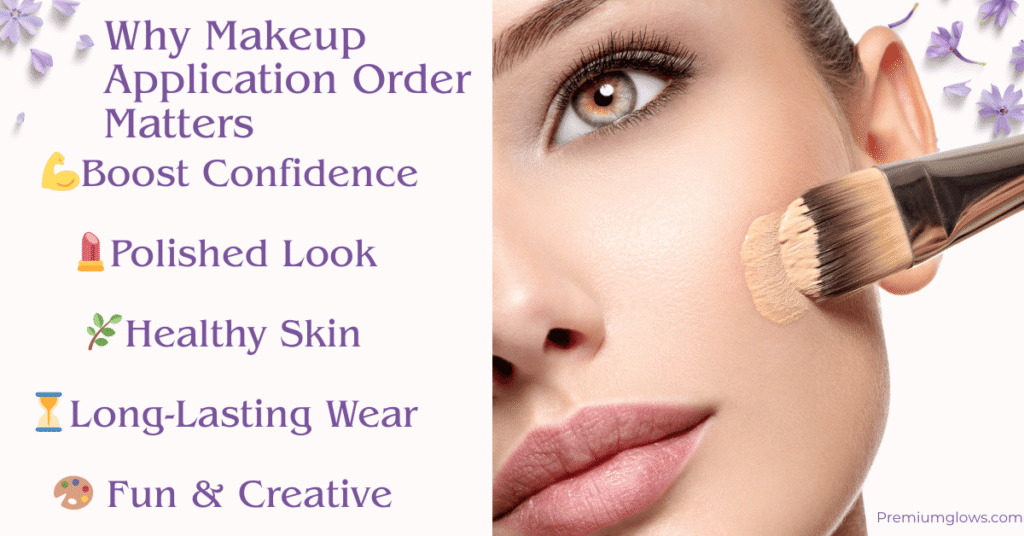
Improving your makeup skills can make you look better and feel more confident. Makeup can make you look polished and professional by highlighting your best features.
The order in which you put on cosmetics also has an effect on your skin, not just how it looks. When you layer items correctly, they work together without blocking pores or creating irritation. It also helps your makeup last longer, so it stays in place from morning to night, whether you’re at work all day or at a special event.
Getting good at your makeup regimen not only makes you look better, but it also makes doing makeup more fun.
Foundation vs. Concealer: Know Their Purpose
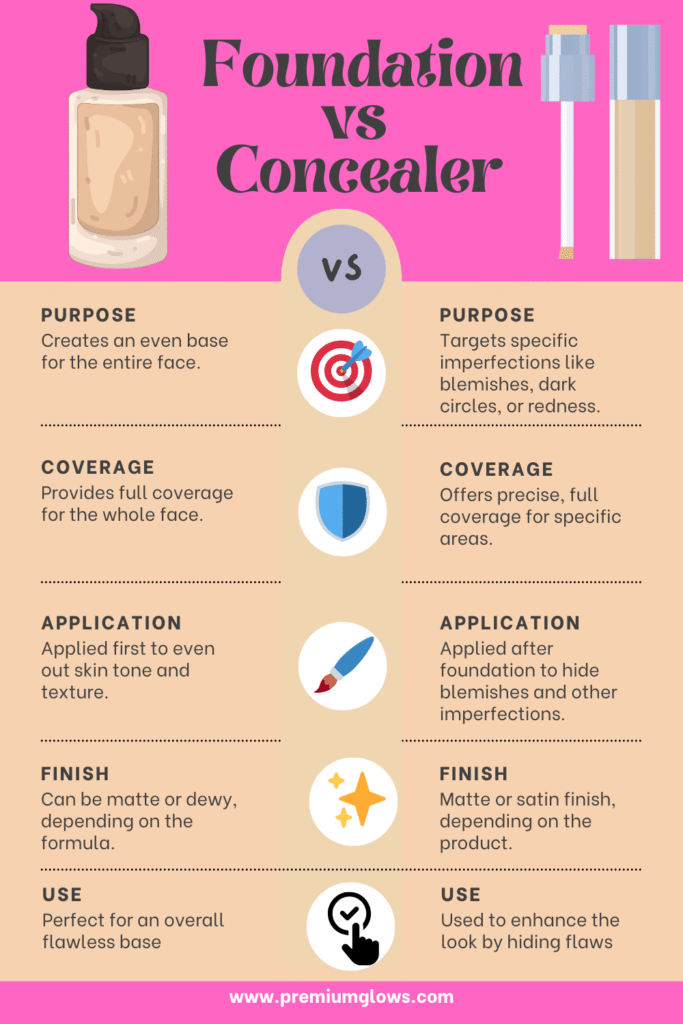
Foundation is what you put on first to create your makeup look. It makes your skin tone and texture more even, giving you a smooth base. Foundation is the base for everything else, whether you like a matte or dewy look.
Concealer, on the other hand, is all about being exact. It is meant to hide specific flaws, such as blemishes, dark circles, and redness. Foundation covers your whole face, while concealer focuses on particular areas to give you that extra push of perfect coverage.
Together, these two items will improve the look of your skin. Knowing what each one does will help you use them correctly to get a professional, balanced look.
Applying Foundation First: Pros & Cons
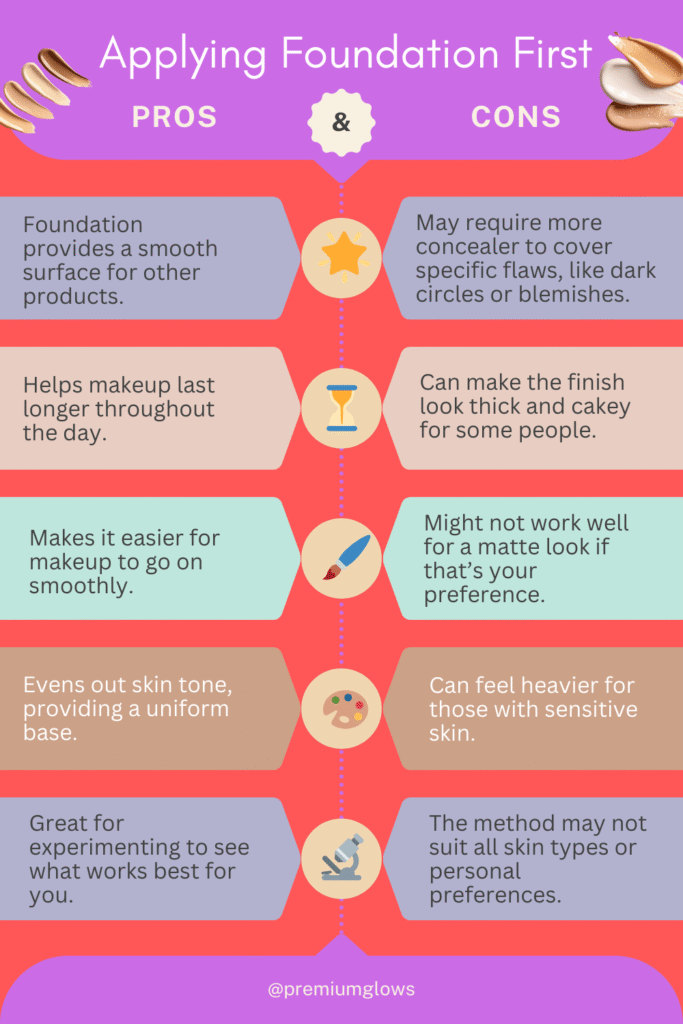
Pros: There are many benefits to starting with a solid foundation. It provides a flat surface, making it easy to mix other products. Foundation makes your skin smooth, which makes it easier for makeup to go on, and it can make your whole look last longer.
Cons: If you have specific flaws, like dark circles or blemishes, you may need to use more concealer to cover them up entirely if you put on foundation first. Some individuals think this makes the finish look thicker and cakey.
Also, if you want a matte look, putting on foundation first might not work.
In the end, it’s all about experimenting to find what works best for your skin and what you enjoy.
Applying Concealer First: Pros & Cons
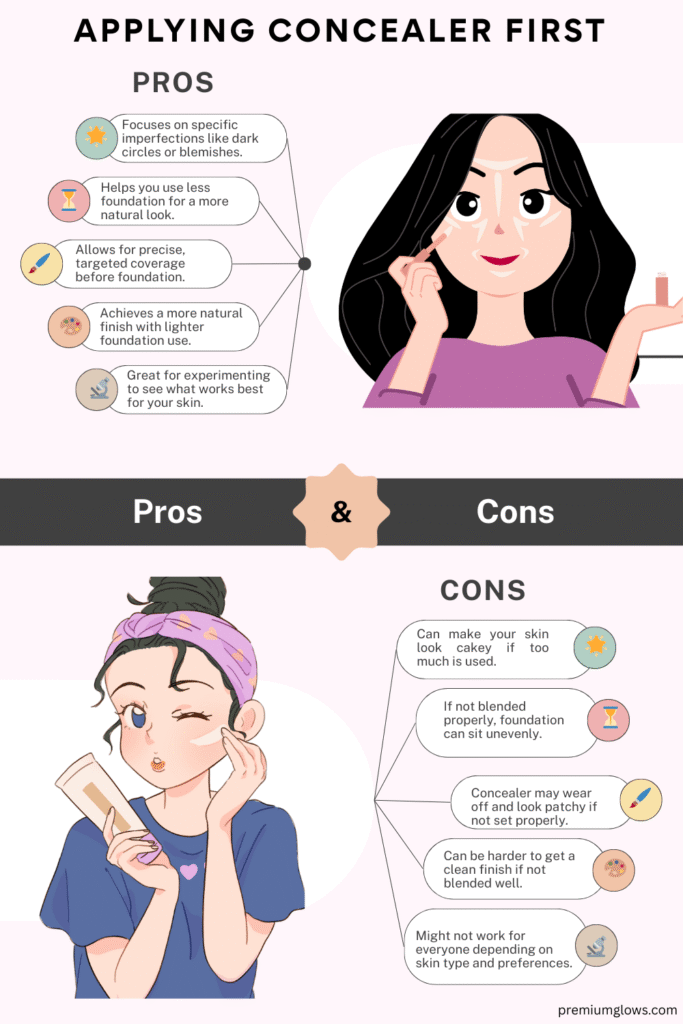
Pros: If you require exact coverage, starting with concealer is the best way to go. It lets you focus on dark circles or imperfections right away. This technique can help you use less foundation later, which will make your makeup look more natural.
Cons: On the other hand, using too much concealer might make your skin look cakey after you put on foundation. Also, if concealer isn’t blended correctly, it can make foundation sit unevenly, which makes it more challenging to get a clean finish.
Another problem is that concealer can wear off over the day if it isn’t set correctly, which can make it look patchy as the day goes on.
Like foundation-first, the most important thing is to try different things to see whether concealer-first works better for you.
Step-by-Step: Foundation First
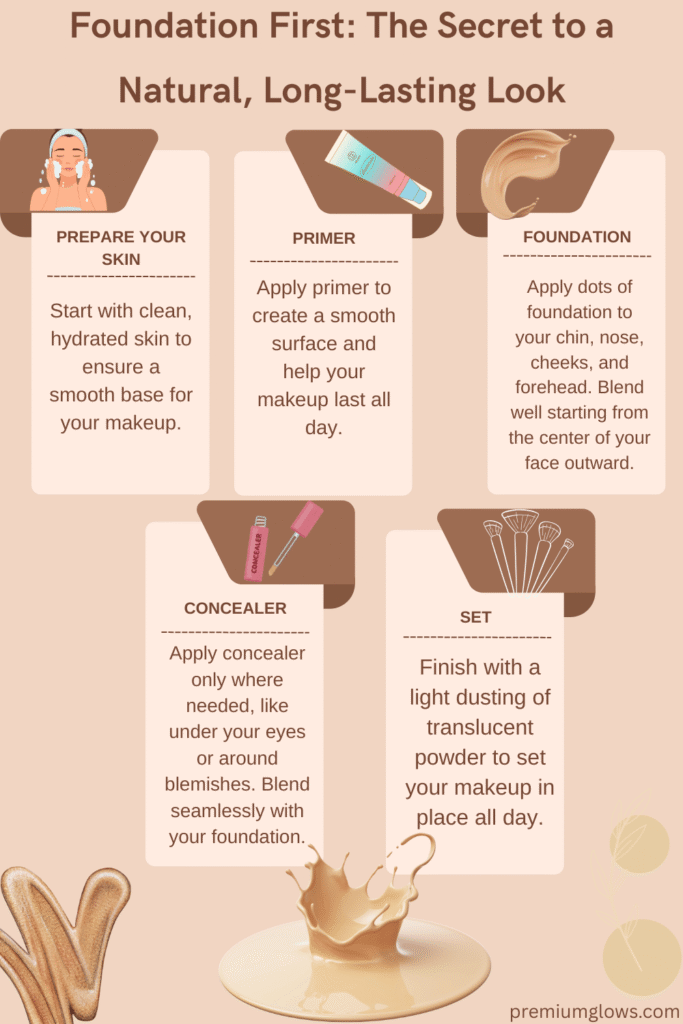
Prepare Your Skin: For a smooth base, start with skin that is clean and hydrated.
Primer: Use primer to make your makeup last longer and make your skin smooth.
Foundation: Put dots of foundation on your chin, nose, cheeks, and forehead. Use a damp sponge or brush to mix it in, starting in the middle of your face and moving outward.
Use concealer only where you need it, like under your eyes or around blemishes, and make sure it blends in perfectly with your foundation.
Set: To keep everything in place, finish with a slight dusting of translucent powder.
Step-by-Step: Concealer First
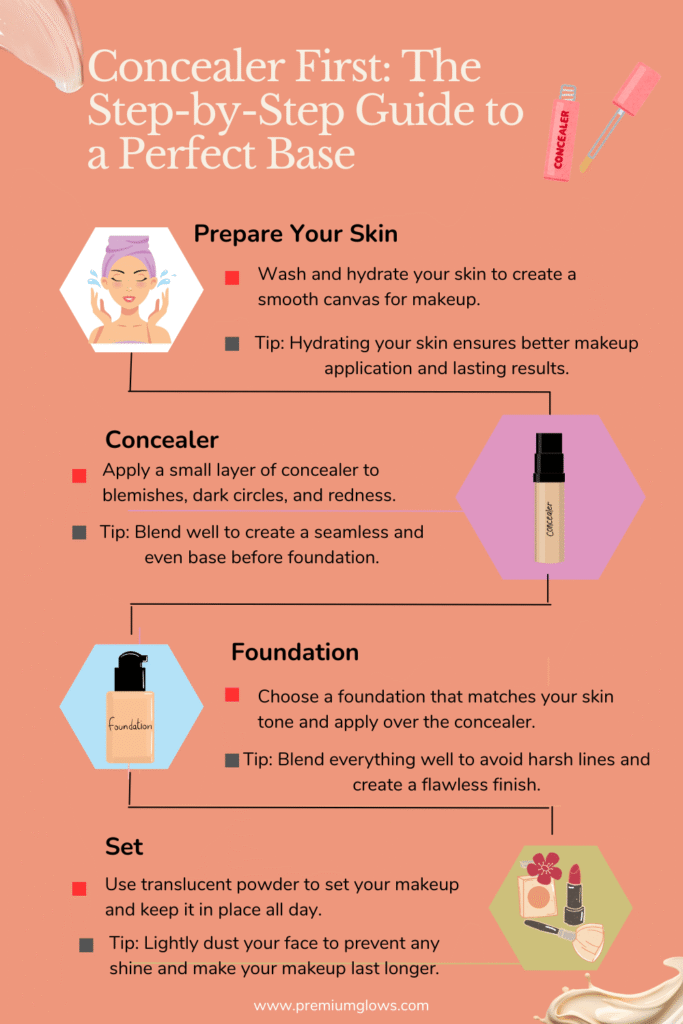
Prepare Your Skin: Wash and hydrate your skin to get the finest results with your makeup.
Concealer: Put a small layer of concealer right on top of dark circles, blemishes, and redness. Mix well to get a smooth base.
Foundation: Choose a foundation that matches your skin tone and apply it over the concealer. Mix well to eliminate any harsh lines.
Set: Use translucent powder to keep your makeup in place all day.
Tips for a Flawless Finish
Getting a perfect look is more than just knowing how; it starts with getting ready the right way.
First, take care of your skin. A healthy skincare routine is essential. Makeup goes on better on clean, hydrated skin.
Use a Primer: A good primer makes your pores smaller and makes your makeup last longer.
The right tools, such as brushes and sponges, help you blend and get a smooth finish.
Set Your Makeup: If you have oily skin, translucent powder will help keep shine away.
Finish with Setting Spray: Use a setting spray to keep your makeup in place and give your skin a dewy sheen.
Try out these methods to improve your makeup skills.
Finding the Right Order for You
It’s up to you what sequence to do your makeup in. Don’t be hesitant to try both foundation-first and concealer-first methods because everyone’s skin and preferences are different. Monitor how each method affects your overall look throughout the day, adjusting it according to your skin type and desired style.
Your choice may also be affected by some products. Some foundations have buildable coverage, which means you might not need as much concealer. Others could need more.
The most important thing is to discover a regimen that works for you and gets you the results you want.
Common Mistakes to Avoid
Over-Applying Product: Using too much foundation or concealer can make your skin look cakey.
Skipping Skin Prep: Always start with skin that is clean and hydrated so that makeup goes on smoothly.
Blending Issues: Ensure you thoroughly blend the products into your skin. To get a perfect finish, use the right equipment for each product.
Skipping Setting Products: To keep your look all day, you need translucent powder and setting spray.
FAQ
Q: Should I apply concealer or foundation first?
A: Most people get the most natural result by applying foundation first, then using concealer only where coverage is still needed.
Q: When is concealer first the better choice?
A: Use concealer first if you are spot-correcting intense discoloration, like blue under-eyes or vivid blemishes, and want to use less foundation overall.
Q: Does skin type change the order?
A: Yes. Oily or combination skin often benefits from foundation first to even tone quickly; very dry skin may prefer targeted concealer first to avoid layering too much base.
Q: What about mature skin and fine lines?
A: Apply a thin layer of hydrating foundation first, then a small amount of lightweight concealer only where needed, and set sparingly to avoid creasing.
Q: How do I handle dark circles that show through foundation?
A: Place peach or orange color corrector on the darkness, blend, apply foundation, then add a thin veil of brightening concealer only if needed.
Q: What is the best order with primer and sunscreen?
A: Skincare, sunscreen, primer, foundation, then concealer, followed by powder or setting spray if desired.
Q: Liquid, cream, or stick—does the texture change the order?
A: With liquid bases, foundation first usually blends best. With full-coverage sticks, spot-conceal first so you use less product overall.
Q: How can I prevent concealer from looking cakey under the eyes?
A: Use a hydrating eye prep, apply a very small amount of concealer, and set with minimal powder or a fine mist; avoid stacking multiple layers.
Q: What is the quickest everyday routine?
A: Sheer foundation or tinted moisturizer first to even tone, then pinpoint concealer on redness, blemishes, and under-eyes.
Q: Should I set before or after concealer?
A: Set after both foundation and concealer are blended. Press a light dusting of loose powder where you crease or get oily.
Q: How do I avoid moving concealer when I apply foundation on top?
A: Place concealer, let it set 30–60 seconds, then apply foundation around it with tapping motions—not swiping.
Q: Does the tool matter for the order?
A: Brushes build coverage and precision; damp sponges sheer and blend edges. Choose tools that match your desired finish.
Q: Any order tips for acne or textured areas?
A: Apply foundation first to gauge coverage, then a thin, high-coverage concealer on active spots; avoid heavy layers over texture.
Q: What causes flashback with concealer or foundation?
A: Some SPF and brightening powders can reflect light. Test with flash and choose micro-fine powder to set only where needed.
Conclusion
There is no one correct answer to the question of whether foundation or concealer should come first. The ideal way to do it depends on your skin type, your desired appearance, and your personal preferences. Try both methods and discover which one works best for you.
Keep in mind that makeup is a way to be creative and show off your personality. You will learn the tricks that make you look better with practice. Use good products, mix properly, and set your makeup so it lasts a long time. You will be well on your way to a perfect finish every time.
Leave a Reply