


Body butter is the plush, cushiony moisturizer you reach for when your skin feels tight, rough, or “ashy” no matter how much lotion you use. Because it’s richer (and usually more oil-heavy) than body lotion, it’s best at sealing in moisture—especially right after showering, on rough patches, and overnight.
If you’ve ever wondered when to apply body butter, how much to use, or whether it’s better than lotion, this guide breaks it down step-by-step—plus seasonal tips, storage fixes (when it melts or gets rock-hard), and the most common mistakes that make body butter feel greasy or “just sit on top” of skin.
Quick Answer: How to Use Body Butter
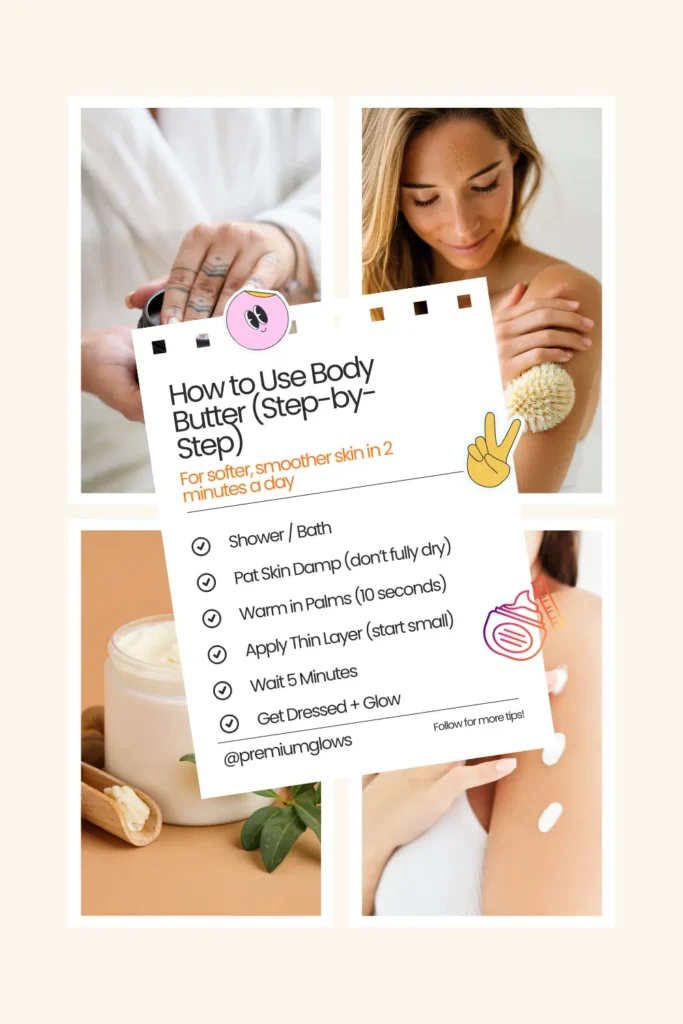
- Best time: Within 3 minutes after a shower, on slightly damp skin.
- How much: Start with a grape-sized amount per area (arm/leg), then add only where needed.
- How often: Daily for dry skin; 2–4x/week for normal skin; nightly in winter.
- Where: Elbows, knees, shins, hands, feet—avoid chest/back if you break out there.
- Pro tip: Warm it between palms first, then press + smooth (don’t over-rub).
✨ Last Updated: January 24, 2026
What’s new in the 2026 update:
- Improved “quick answer” section for faster use-cases + featured snippet targeting
- Added clearer “how much to use” guidance by body area (hands/feet/legs/torso)
- Refined body butter vs lotion rules (greasy-feel prevention + acne-prone areas)
- Updated storage + texture fixes (hard, grainy, or melted)
- Expanded FAQ + updated schema to match 2026 content
What Does Body Butter Do?
One opulent skincare product meant to hydrate and moisturize the skin thoroughly is body butter. A thicker, more emollient texture than standard lotions—is perfect for dry or rough skin. It is made with nutrient-dense, antioxidant-rich plant-based oils, including mango butter, cocoa butter, and Shea butter, which nourish and revitalize the skin.
Applying regularly leaves your skin feeling soft, silky, and flexible. It absorbs quickly and offers strong moisture. Though it’s ideal for all-over use to maintain healthy, hydrated skin, it can also treat dry spots on elbows, knees, and feet.
Types of Body Butter
Each of the several varieties of body butter has special advantages. When selecting it, consider the particular demands of your skin. The most often-used varieties of body butter are listed here:
Shea Butter
Shea butter is a classic in body butter formulas because it’s deeply emollient and helps support a smoother, more comfortable skin feel—especially when dryness makes skin look dull or feel tight. If you have a diagnosed condition (like eczema-prone skin), choose fragrance-free options and patch test first; for persistent irritation, it’s best to check with a dermatologist.
Cocoa Butter
Rich in antioxidants and fatty acids, cocoa butter feeds and hydrates the skin. It helps reduce irritation and increase suppleness, soothing sensitive skin. Cocoa butter is often utilized to aid the fade of stretch marks and scars.
Mango Butter
Mango butter’s potential to moisturize and soften the skin without making it feel oily is well-known. Rich in vitamins C and A, it’s a great choice for anyone looking to clear their skin or shield it from environmental stresses.
Coconut Butter
Coconut butter is remarkably moistening, perfect for dry, flaky skin. It is also renowned for enhancing the skin’s suppleness and restoring its natural barrier.
Olive Oil Butter
Olive oil butter is an excellent choice for calming irritated skin because it is bursting with antioxidants and anti-inflammatory agents. It’s also a great anti-aging agent because it stimulates collagen synthesis and helps lessen the appearance of fine lines and wrinkles.
Each of these body butters has special advantages, so choose the one that is best for your skin type and problems.
How to Apply Body Butter
Knowing what body butter accomplishes and the many varieties now helps you to understand to use it correctly to maximize its benefits. Although the procedure is straightforward, a few pointers will enable you to get the finest outcomes.
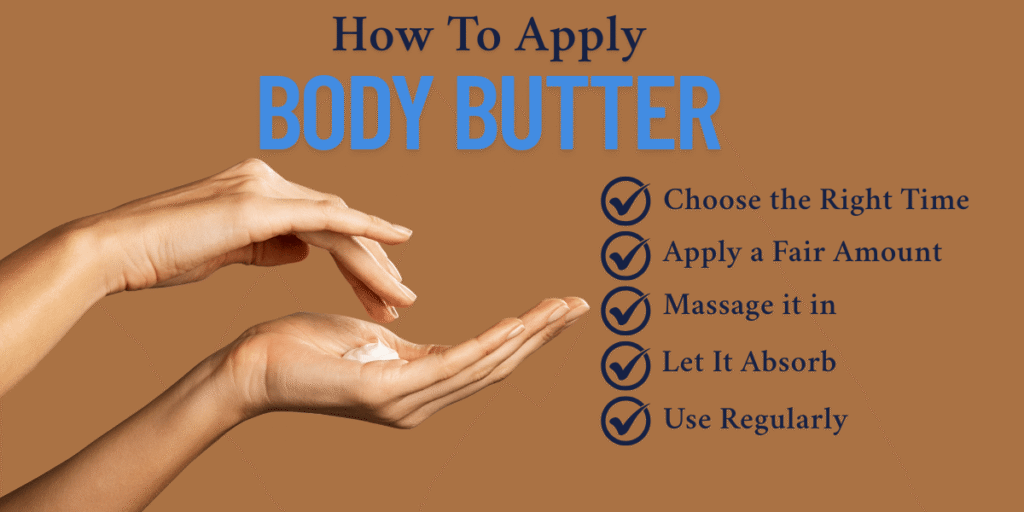
Choose the Right Time:
it is ideal to apply after a shower or bath. This is when your skin remains moist, locking in moisture. After towel-drying your skin to leave it just moist, apply when the skin is still warm. This guarantees more effective absorption of the substance by your skin.
Apply a Fair Amount:
Body butter is really rich, so you don’t need to use much of it. However, to cover your whole body, particularly dry areas like knees, elbows, and feet, you should apply a liberal quantity.
Massage it in:
Take your time massaging body butter into your skin to fully enjoy it. Circular motions help boost blood circulation, and you should also make sure the butter is completely absorbed. Pay close attention to places like your hands, elbows, and heels that often feel dry or scratchy.
Let It Absorb:
Give body butter time since it absorbs somewhat more slowly than ordinary lotion. Let the product soak totally before dressing to prevent any residue on your clothing. Should you be pressed for time, gently dab any extra product with a fresh cloth.
Use Regularly:
Applying daily can help you achieve the best results. Particularly in the colder months, when skin often gets drier, regular application will keep your skin hydrated and supple. For the best moisture, if you have especially dry skin, you could choose to apply twice a day.
What Problem Does Body Butter Solve?
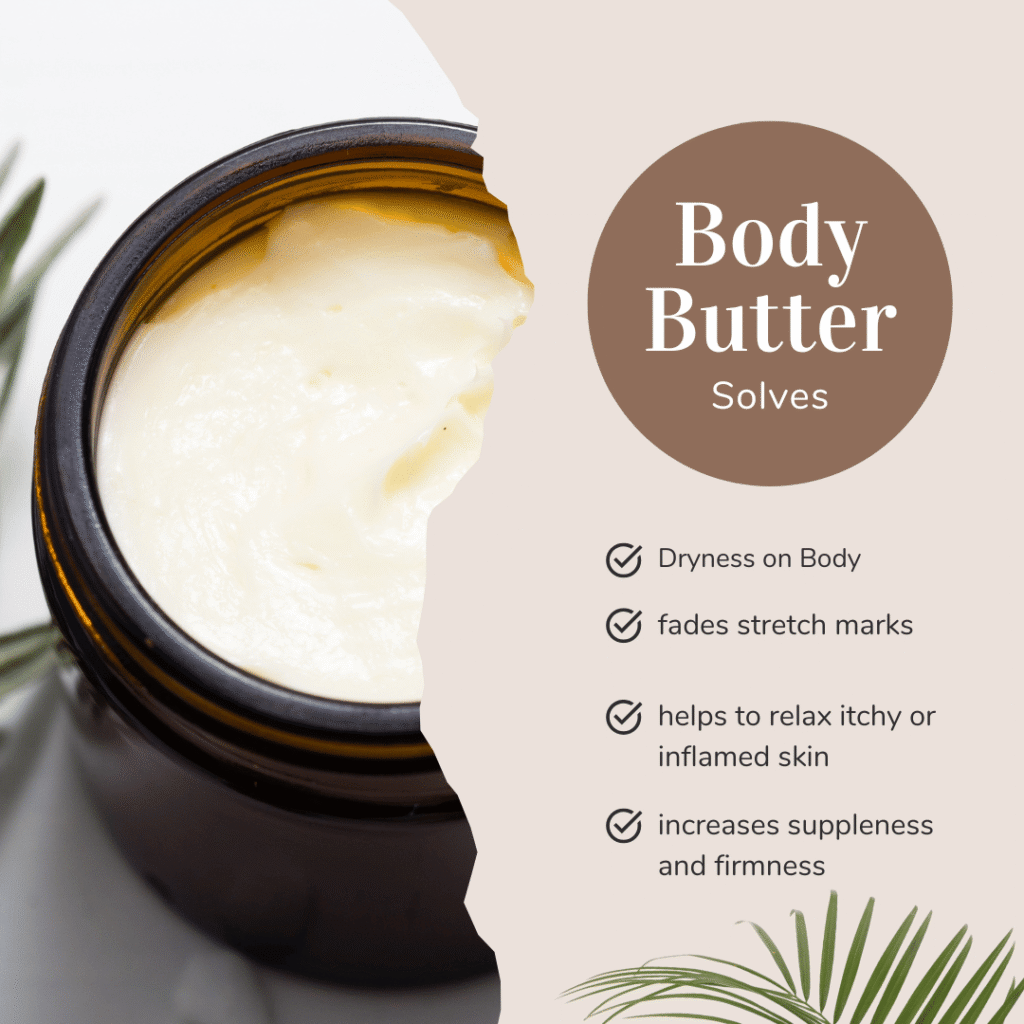
Though it can alleviate many other skincare issues, body butter is mostly used to treat dry skin. the product can assist with specific common problems, including:
- Dry, Rough Skin
People most often use body butter to fight dry and rough skin. Its rich, thick feel forms a moisture barrier that locks in hydration and protects the body skin from environmental stresses. - Stretch Marks and Scarring
Some body butters—especially those with cocoa are said to help fade stretch marks and scars. Although they might not completely remove them, consistent application can diminish discoloration and increase skin flexibility. - Skin Inflammation and Irritation
Itchy and inflamed skin may cause skin damage if you fail to find out perfect remedy. Shea Body butter might help to relax itchy or inflamed skin. The natural anti-inflammatory qualities of ingredients like shea butter and cocoa butter help them treat disorders, including eczema, psoriasis, and other skin diseases. - Aging skin
Additionally, body butter is good for aging skin since it increases suppleness and firmness. Ingredients like antioxidants and fatty acids help stimulate skin renewal, lessening fine lines and wrinkles.
Which Body Butter Suits Your Skin?
Dry skin: Choose richer butters (like shea or cocoa) and apply daily—especially after showering—so your skin stays comfortably moisturized for hours.
Sensitive skin: Pick a fragrance-free body butter with a shorter ingredient list. Warm a small amount in your hands first and apply to slightly damp skin to reduce rubbing.
Oily or acne-prone body skin: Use body butter only where you truly need it (legs, elbows, hands, feet). Avoid chest, back, and shoulders if you get breakouts there, and consider using a lightweight body lotion for those areas instead.
FAQ
When should I apply body butter?
Apply body butter within 3 minutes after showering, while skin is still slightly damp. This helps trap moisture and improves that soft, “sealed-in” finish. Nighttime application is also ideal for an overnight treatment.
How much body butter should I use?
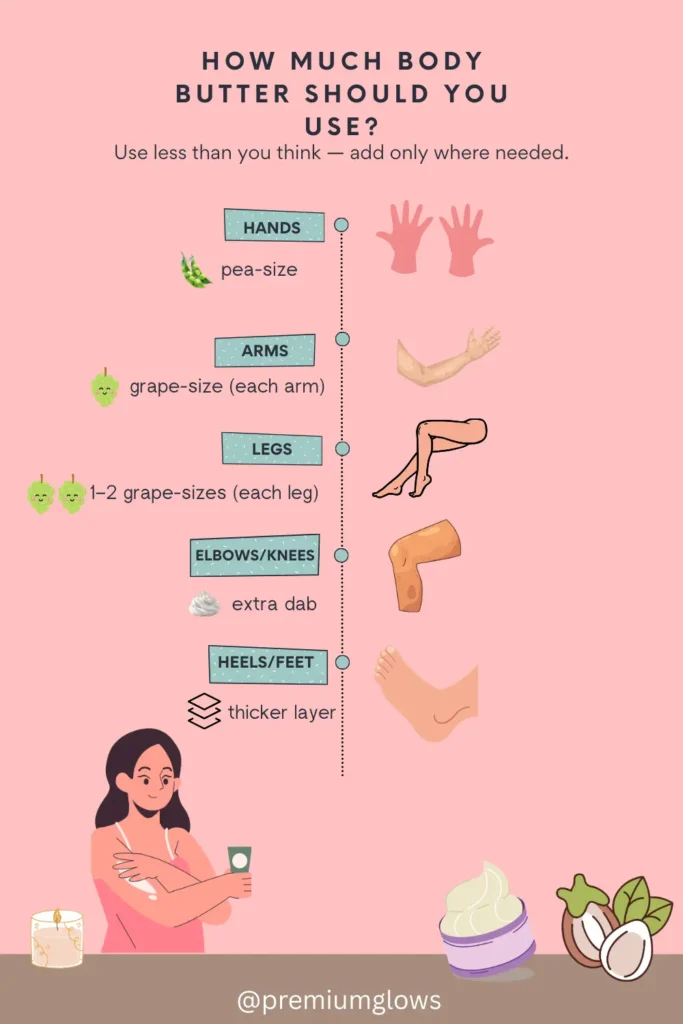
Start small: a grape-sized amount per arm, and 1–2 grape-sizes per leg. Warm it between palms, then smooth over skin. Add more only on rough patches (elbows, knees, shins, heels).
How often should I use body butter?
For very dry skin, use it daily (or twice daily in winter). For normal skin, 2–4 times per week is usually enough. Adjust based on climate, shower frequency, and how your skin feels.
Do I need to wash body butter off?
No. Body butter is a leave-on moisturizer. Let it absorb before getting dressed. If you accidentally applied too much, blot lightly with a clean towel—no rinsing needed.
Can body butter cause body breakouts?
It can—especially if you apply it on acne-prone areas (chest/back/shoulders) or right after sweating. If you’re breakout-prone, use body butter on legs, hands, feet, elbows, and knees, and stick to lighter lotion on acne-prone zones.
Body Butter vs Body Lotion: When to Use Which
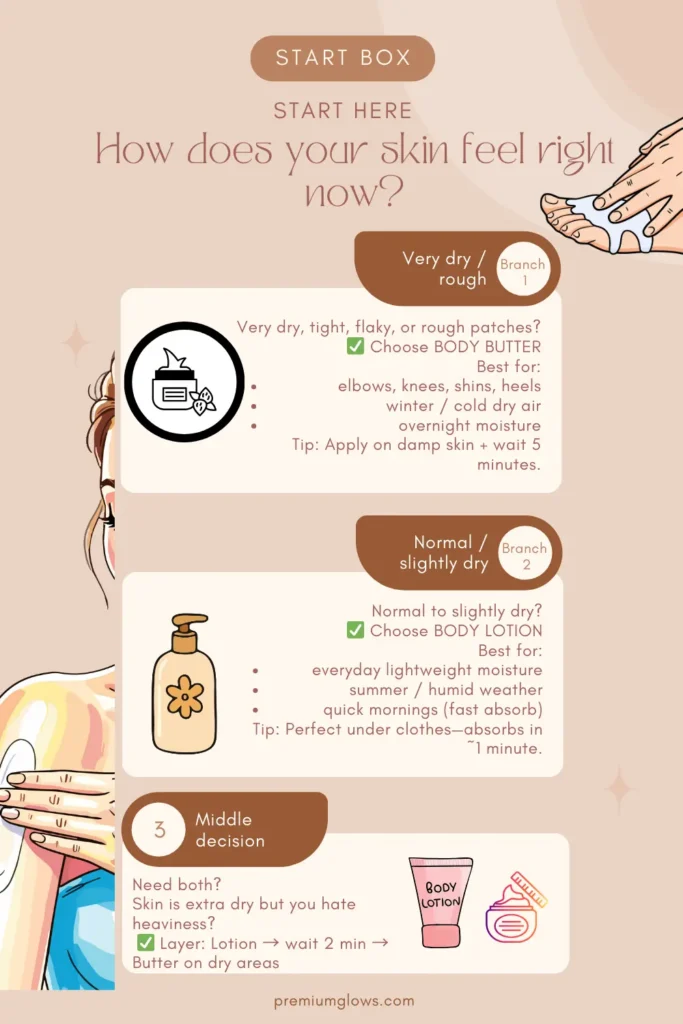
Confused about when to use body butter vs lotion? Here’s your complete guide.
Quick Decision Flowchart
Use Body Butter When:
- ✅ Your skin is very dry or dehydrated
- ✅ It’s winter or cold, dry climate
- ✅ You have rough patches (elbows, knees, feet)
- ✅ You need intense, long-lasting moisture
- ✅ You’re applying before bed (overnight treatment)
- ✅ You have mature skin (needs richer moisture)
Use Body Lotion When:
- ✅ Your skin is normal to slightly dry
- ✅ It’s summer or hot, humid weather
- ✅ You need to get dressed quickly (lotion absorbs faster)
- ✅ You want light, daily moisture
- ✅ You have oily or acne-prone body skin
- ✅ You’re applying before going out
Complete Comparison Chart
| Feature | Body Butter | Body Lotion |
|---|---|---|
| Texture | Thick, rich, creamy | Thin, lightweight, fluid |
| Absorption time | 3-5 minutes | 30-60 seconds |
| Moisture level | Intense, long-lasting | Light to medium |
| Best for | Very dry skin | Normal to dry skin |
| Best season | Fall/Winter | Spring/Summer |
| Water content | Lower water content, higher oils/butters (more occlusive) | Higher water content (lighter feel) |
| Oil content | High (shea, cocoa butter) | Lower (lightweight oils) |
| Stays on skin | 8-12 hours | 4-6 hours |
| Price per oz | Higher | Lower |
| Best time | Before bed | Morning/anytime |
| Under clothes | Wait 5+ mins | Wait 1-2 mins |
| Greasy feel | Can be if over-applied | Rarely |
When to Use BOTH
Layering technique for extremely dry skin:
- Right after shower: Apply body lotion to damp skin (seals in moisture)
- Wait 2 minutes: Let lotion absorb
- Apply body butter: Focus on extra-dry areas (elbows, knees, shins, feet)
- Wait 5 minutes: Before getting dressed
Result: Maximum hydration that lasts all day!
Best combinations:
- Lightweight lotion all over + rich body butter on problem areas
- Hydrating lotion (morning) + body butter (night before bed)
- Lotion daily + body butter 2-3x per week for maintenance
Seasonal Body Butter Application Tips
Body butter needs different application techniques depending on season.
Winter Application (October – March)
Why winter is different:
- Air is drier (heaters, cold wind)
- Skin loses moisture faster
- Hot showers strip natural oils
- Skin becomes more dehydrated
Winter application technique:
Step 1: Adjust shower temperature
- Use warm (not hot!) water
- Limit showers to 5-10 minutes
- Use gentle, moisturizing body wash
- Pat semi-dry (leave skin slightly damp)
Step 2: Apply body butter generously
- Use MORE than you would in summer (extra layer needed)
- Apply to damp skin (within 3 minutes of shower)
- Focus extra on: hands, feet, elbows, knees, shins
- Don’t skip: chest, back, arms (these get dry too!)
Step 3: Layer if needed
- Very dry skin: Apply lotion first, then body butter
- Normal skin: Body butter alone is enough
- Hands/feet: Apply extra layer before bed
Step 4: Wait before dressing
- Wait 5-7 minutes (longer in winter – butter is thicker in cold)
- Rub in any excess that hasn’t absorbed
- Put on loose, breathable clothes
Winter-specific tips:
- Apply before bed 3-4x per week (overnight treatment)
- Keep body butter at room temp (not cold bathroom – too hard to apply)
- Use humidifier in bedroom (helps skin retain moisture)
- Reapply to hands throughout day (they dry out fastest)
Related: Best Premium Body Wash for gentle winter cleansing
Summer Application (April – September)
Why summer is different:
- Higher humidity (skin needs less moisture)
- Sweat can mix with body butter (feels greasy)
- Warm weather softens body butter
- Need lighter application
Summer application technique:
Step 1: Shower timing
- Evening showers better (butter has time to absorb overnight)
- Morning showers: Skip body butter or use minimal amount
- Lukewarm water (even in summer!)
- Pat completely dry (not damp like winter)
Step 2: Apply body butter sparingly
- Use HALF the amount you’d use in winter
- Apply only to problem dry areas (elbows, knees, feet)
- Skip oily areas (chest, back if you sweat there)
- Focus on: legs, arms, feet only
Step 3: Alternative: Body butter at night only
- Morning: Use lightweight body lotion instead
- Night: Body butter before bed
- Let absorb overnight
- Wake up with soft skin, no daytime greasiness
Step 4: Adjust consistency
- If body butter is too soft/melted, store in cool place or fridge
- If too thick, warm between hands longer before applying
- Consider switching to lighter body butter formula in summer
Summer-specific tips:
- Apply after air conditioning (AC dries skin)
- Use less on humid days, more on dry AC days
- Keep travel-size in purse for hand/elbow touch-ups
- Switch to body lotion for full-body moisture
Spring/Fall Transition (Best of Both)
Moderate weather application:
- Use medium amount (between winter and summer)
- Apply all over body 2-3x per week
- Use body lotion other days
- Adjust based on daily weather (rain/dry/humid)
Body Butter Storage Tips for Best Texture
Proper storage keeps body butter smooth and easy to apply.
Ideal Storage Conditions
Best temperature: 60-75°F (15-24°C)
- Not too cold (becomes rock-hard)
- Not too hot (melts and separates)
- Room temperature is perfect
Best location:
- Bedroom dresser or closet
- Bathroom cabinet (if bathroom isn’t steamy)
- NOT: Window sill (sun degrades ingredients)
- NOT: Hot bathroom (steam and heat cause separation)
Container care:
- Keep lid tightly closed (prevents oxidation)
- Use clean, dry hands or spatula (no water in container!)
- Don’t leave open (collects dust and bacteria)
What to Do When Body Butter Gets Too Hard (Winter)
If body butter is rock-solid:
Method 1: Warm it up (fastest)
- Scoop out amount needed with clean spoon
- Warm between palms for 10-15 seconds
- Will melt and become spreadable
- Apply as normal
Method 2: Room temperature storage
- Move container out of cold bathroom
- Store in bedroom at room temp
- Will naturally soften within a day
Method 3: Microwave (be careful!)
- Transfer small amount to microwave-safe bowl
- Heat 5 seconds at a time
- Stir between intervals
- Don’t overheat! (destroys beneficial ingredients)
- Let cool slightly before applying
Method 4: Make whipped body butter
- Let container come to room temperature
- Use electric mixer to whip entire container
- Becomes fluffy and easier to spread
- Store in container, will stay whipped
What to Do When Body Butter Gets Too Soft (Summer)
If body butter is melted or very soft:
Method 1: Refrigerate temporarily
- Put in fridge for 30 minutes before use
- Will firm up to ideal consistency
- Take out just before shower
- Apply while still slightly cool
Method 2: Store in cool place
- Move away from warm bathroom
- Keep in coolest room of house
- AC vent area is great
- Will naturally firm up
Method 3: Embrace the softness!
- Actually easier to apply when soft
- Just use less amount
- Spreads more easily
- May absorb faster
What NOT to do:
- ❌ Don’t freeze (changes texture permanently)
- ❌ Don’t add ingredients (contamination risk)
- ❌ Don’t leave in hot car (will completely melt)
Common Body Butter Problems (And Solutions)
Troubleshoot your body butter issues here.
Problem: Body Butter Feels Too Greasy
Possible causes:
- Using too much product
- Not letting it absorb before dressing
- Applying to dry skin instead of damp
- Formula has too many oils for your skin type
Solutions:
- ✅ Use HALF the amount you currently use
- ✅ Apply to damp skin right after shower (absorbs better)
- ✅ Wait full 5-7 minutes before getting dressed
- ✅ Blot excess with tissue if still greasy after 5 minutes
- ✅ Switch to lighter body butter formula (less cocoa butter, more shea)
Quick fix: If already applied and greasy, dust with light body powder or cornstarch
Problem: Body Butter Not Absorbing
Possible causes:
- Skin barrier is damaged (over-exfoliated)
- Skin is too dry (needs prep)
- Body butter is expired or oxidized
- Applying to completely dry skin
Solutions:
- ✅ Exfoliate gently 1x per week (removes dead skin blocking absorption)
- ✅ Apply to damp skin always (traps moisture)
- ✅ Check expiration (smell rancid? Toss it!)
- ✅ Layer: Apply body lotion first, then body butter
- ✅ Warm butter between hands before applying
Problem: Body Butter Causing Breakouts on Body
Possible causes:
- Comedogenic ingredients (coconut oil, cocoa butter)
- Not showering after working out before applying
- Applying to chest/back (acne-prone areas)
- Contaminated container (using dirty hands)
Solutions:
- ✅ Avoid body butter on acne-prone areas (chest, back, shoulders)
- ✅ Use only on legs, arms, hands, feet
- ✅ Choose body butter without coconut oil if acne-prone
- ✅ Always use clean hands or spatula
- ✅ Shower/cleanse before applying
- ✅ Switch to body lotion for acne-prone areas
Related: Korean Pimple Patches for body breakouts
Problem: Body Butter Leaves White Residue on Skin
Possible causes:
- Too much product applied
- Skin is too dry (butter sitting on top, not absorbing)
- Formula has excess butters/waxes
- Not warming product before applying
Solutions:
- ✅ Use less product (start with small amount)
- ✅ Exfoliate skin first (removes barrier to absorption)
- ✅ Warm thoroughly between hands before applying
- ✅ Apply in thin layers, let absorb, add more if needed
- ✅ Switch to creamier body butter (fewer waxes)
Immediate fix: Buff skin gently with dry towel to remove excess
Problem: Body Butter Smells Rancid
Cause: Expired or oxidized natural ingredients
Solution:
- ❌ THROW IT OUT immediately
- Don’t try to “save” it
- Rancid butter can irritate skin
- Buy fresh replacement
Prevention:
- Store properly (cool, dry, sealed)
- Use clean hands only
- Check expiration dates
- Natural/organic butters expire faster (6-12 months vs 18-24 months)
Problem: Body Butter Staining Clothes
Possible causes:
- Not waiting long enough before dressing
- Using too much product
- Body butter contains oils that transfer
- Light-colored clothing showing residue
Solutions:
- ✅ Wait FULL 5-7 minutes before dressing
- ✅ Use less product
- ✅ Pat with tissue to remove excess
- ✅ Wear dark clothes immediately after applying
- ✅ Apply night before, not right before dressing
- ✅ Focus on areas covered by clothes last (legs, arms first; torso last)
For special clothes: Apply body butter night before, not morning of wearing nice clothes
Problem: Body Butter Not Lasting/Skin Still Dry
Possible causes:
- Not using enough product
- Skin is severely dehydrated (needs more than butter)
- Not applying to damp skin
- Environmental factors (very dry climate, harsh weather)
Solutions:
- ✅ Layer: body lotion + body butter
- ✅ Apply twice daily (morning and night)
- ✅ Use more generous amount on very dry areas
- ✅ Drink more water (hydration from inside)
- ✅ Use humidifier in home
- ✅ Apply immediately after shower while skin damp
- ✅ Exfoliate weekly (removes dry layer blocking moisture)
Related: Best Olive Oil Body Lotion if you want a lighter daily moisturizer for warm weather.
Body Butter Application for Specific Body Areas
Different areas need different application techniques.
Hands (Apply 3-5x Daily)
Why hands need special attention:
- Washed frequently (strips natural oils)
- Exposed to elements (sun, cold, wind)
- Age faster than other body parts
- Show dryness most obviously
Application technique:
- After each hand washing, while hands still slightly damp
- Pea-sized amount of body butter
- Warm between palms
- Massage into backs of hands (age fastest)
- Don’t forget: cuticles, between fingers, wrists
- Let absorb 1-2 minutes
Overnight treatment:
- Apply generous layer before bed
- Optional: wear cotton gloves overnight
- Wake up with incredibly soft hands
Feet (Focus on Heels and Soles)
Application technique:
- After shower while feet still damp
- Apply generous amount (feet can handle more!)
- Focus on: heels, balls of feet, edges
- Massage in circular motions
- Don’t skip: tops of feet, ankles
- Put on socks immediately (helps absorption)
For cracked heels:
- Exfoliate first with foot file or pumice
- Apply THICK layer of body butter
- Wear socks overnight
- Do daily for 1-2 weeks for dramatic improvement
Elbows and Knees (Extra Dry Areas)
Application technique:
- Exfoliate gently in shower (these areas have thicker skin)
- Apply body butter while still damp
- Use extra amount (these areas need more)
- Massage in circular motions
- Reapply throughout day if visible dryness
Prevention: Apply every single day, even when not visibly dry
Legs and Arms (Large Surface Areas)
Application technique:
- Apply to damp skin after shower
- Start at ankles/wrists, work upward (helps circulation)
- Use long, smooth strokes (not circular – covers area faster)
- Shins need extra (driest part of legs)
- Don’t over-apply to inner thighs (friction area)
Shaving tip: Wait 30 minutes after shaving before applying body butter (prevents irritation)
Chest and Back (Often Forgotten)
Application technique:
- Use LESS than other areas (these can get oily or break out)
- Avoid if you have body acne
- Focus on: décolletage (chest area – ages visibly)
- Use long-handled applicator for back if needed
Skip body butter here if: You have back acne, chest breakouts, or very oily skin
Stomach and Torso
Application technique:
- Thin layer only (absorbs poorly if too much)
- Massage in circular clockwise motion (aids digestion!)
- Extra attention to: sides of torso (get dry but forgotten)
Stretch mark prevention:
- Pregnant? Apply 2x daily to belly
- Losing weight? Apply daily to skin experiencing change
Related: Best Olive Oil Body Lotion – lighter alternative for torso
Body Butter Do’s and Don’ts
✅ DO:
- Apply to damp skin within 3 minutes of showering
- Warm between hands before applying
- Start with small amount, add more if needed
- Wait 5-7 minutes before getting dressed
- Store in cool, dry place with lid sealed
- Use clean hands or spatula to scoop
- Apply twice daily for very dry skin
- Exfoliate weekly for better absorption
- Layer with body lotion if needed
❌ DON’T:
- Apply to bone-dry skin (absorbs poorly)
- Use too much (causes greasiness)
- Apply to acne-prone areas (chest, back)
- Put on clothes immediately (stains, doesn’t absorb)
- Share container with others (spreads bacteria)
- Store in hot bathroom (melts and separates)
- Use dirty hands (contaminates butter)
- Skip damp skin step (crucial for absorption!)
- Over-exfoliate (damages skin barrier)
Conclusion
Body butter is a flexible and encouraging product that might change your skincare regimen. Selecting the appropriate body butter for your skin type and using it correctly can help you have smooth, moisturized, beautiful skin that will last year after year.
It creates perfect solution for all specially for dry and sensitive people. Whether your goals are addressing dry spots, calming irritated skin, or stopping aging symptoms. So, why wait? Savour the rich, moisturizing goodness of body butter and treat your skin to what it deserves.
Complete your body care routine:
- [Best Luxury Body Wash] – Premium pre-butter prep
- [Best Olive Oil Body Lotion] – Lighter alternative to body butter
- [Best Shea Butter Lip Balm] – Don’t forget your lips!
Leave a Reply