

That lit-from-within glow looks effortless on your feed—smooth, even, quietly radiant. But in real life? The search for the perfect glow serum can feel like trial-and-error: you try a “brightening serum,” it stings. You layer a new active, and suddenly your cheeks feel tight and reactive.
Here’s the truth: the best serum for glowing skin isn’t the fanciest bottle—it’s the one that matches your glow goal (hydration, brightening, or texture) and layers beautifully with the rest of your routine. Glow is mostly about consistency, barrier support, and using actives in the right order—so your skin looks luminous, not irritated.
One often-overlooked way to boost serum results: apply it immediately after facial steaming. Open, warm pores absorb actives significantly more effectively — if you haven’t tried steaming yet, our guide to the best facial steamers for dry and mature skin covers everything you need to know.
If you’re also looking at your routine more holistically, our guide on how to get natural glow on face covers the full picture — from hydration and sleep to the ingredients that actually make a difference.
In This Article
Affiliate note: This post contains affiliate links. If you buy through them, I may earn a small commission at no extra cost to you.
Quick Picks: Best Serums for Glowing Skin (By Goal)
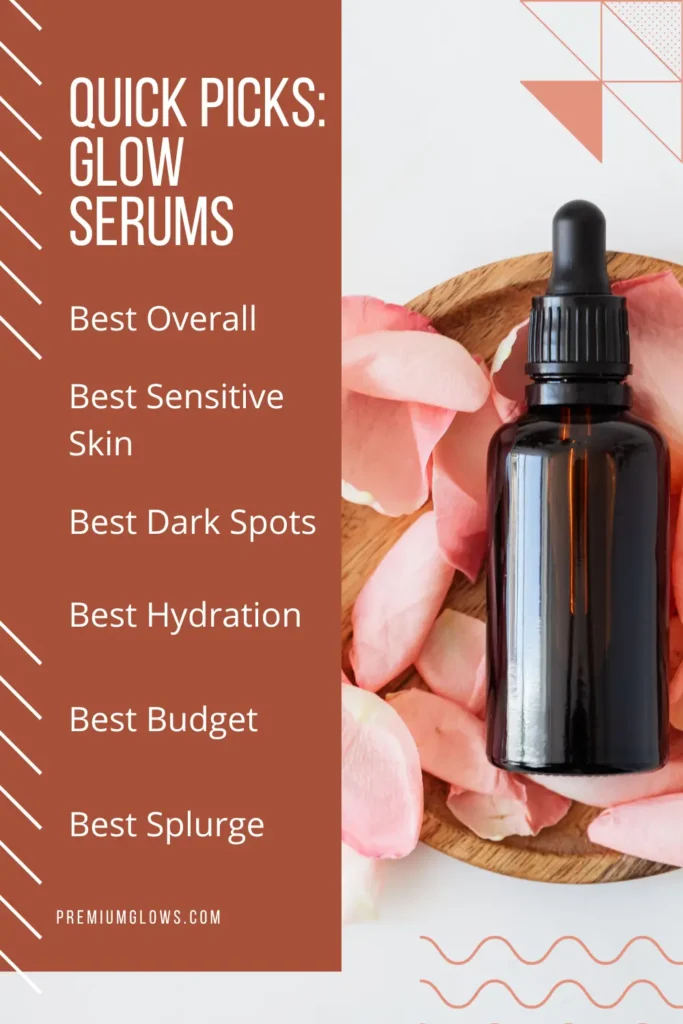
| Quick pick | Best for | Why it glows |
|---|---|---|
| medicube PDRN Pink Peptide Serum | Overall glow + “bouncy” skin | Peptides + barrier support = smoother-looking radiance |
| Glow Recipe Dew Drops | Instant dewy glow (makeup-friendly) | Niacinamide + juicy hydration for that glazed finish |
| Vanicream Vitamin C Serum | Sensitive skin brightening | Gentle brightening with a barrier-comfy feel |
| Good Molecules Hyaluronic Acid Serum | Dry/dehydrated “glass skin” plumpness | Hydration that makes skin look smoother + more reflective |
| Eucerin Radiant Tone Dual Serum | Dark spots + uneven tone | Targeted tone support for a clearer-looking glow |
| Olay Super Serum | Texture glow (start slow) | Gentle resurfacing lane for smoother-looking skin |
| L’Oréal Collagen Moisture Filler | Budget bounce glow | Plush hydration for that “well-rested” look |
| Estée Lauder Advanced Night Repair | Splurge recovery glow | Overnight support for a more refined, rested look |
Why Your Skin Isn’t Glowing (And You’re Not Alone)
If your skin looks “fine” but not radiant, it’s usually one (or a mix) of these glow-killers:
- Dullness: dead skin buildup that makes your face look flat
Once your serum is working, pairing it with the right makeup can amplify that glow even further — like the best cream blush for mature skin, which adds a dewy flush that complements your serum’s radiance.
- Dark spots: post-acne marks or sun-triggered discoloration that breaks up an even tone
- Dryness/dehydration: lack of water makes skin look less plump and reflective
- Texture: visible pores, roughness, or tiny bumps that scatter light
Different problem = different “glow serum.” Choosing the right category is how you get radiance without irritation.
If dullness and dryness are hormonal — common in perimenopause — topical serums work best when paired with internal supplements that support the skin barrier.
The Core Four Glow Ingredients (Simple, Not Scary)
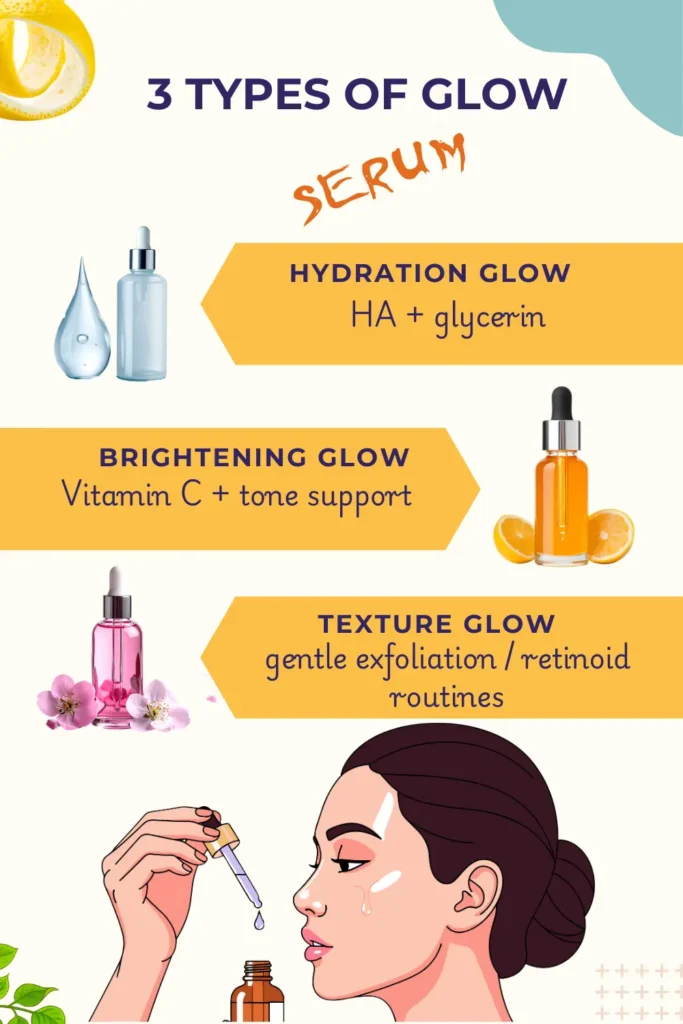
You don’t need every active in one routine. Sensitive skin usually glows best when you keep things streamlined and layer smart.
Vitamin C: The Brightening Superstar
Vitamin C supports a more even-looking tone and adds that “fresh, awake” radiance. If your skin is reactive, choose a gentler form and don’t layer it with too many other actives at once.
Read next: Best Vitamin C Serums for Brightening • Can You Use Retinol and Vitamin C Together?
Niacinamide: Barrier-First Glow + Smoother Texture
Niacinamide is a calm, steady glow-builder: it helps refine the look of pores, support the skin barrier, and reduce the “angry skin” look that can make glow seem impossible.
Read next: Niacinamide Usage Guide • Niacinamide Serum for Dark Spots
“For the under-eye area specifically, niacinamide works better in a dedicated eye cream formula than a full-face serum — the delicate skin there needs a gentler concentration and targeted delivery.”
Hyaluronic Acid: The “Glass Skin” Plumper
Hyaluronic acid is the hydration hero. It helps your skin look plumper and smoother—so light reflects more evenly. Think: soft, cushiony, dewy.
Read next: Best Hyaluronic Acid Serums
Retinoids: Long-Game Radiance
Retinoids (including gentle alternatives like bakuchiol) support smoother-looking texture over time. Start slow, moisturize well, and don’t stack with exfoliating acids on the same night.
Read next: Bakuchiol vs Retinol
The 10 Best Serums for Glowing Skin (Radiance Without Irritation)
How I picked these: I focused on glow results that don’t rely on harshness—hydration, barrier support, gentle brightening, and “start slow” resurfacing options for texture.
1) medicube PDRN Pink Peptide Serum (Best Overall Glow)
Best for: dullness + “bouncy” firm-looking glow
Why it works: peptides + barrier support create a smoother-looking surface, which is where glow really lives.
Texture/finish: cushiony serum—especially pretty under moisturizer or SPF.
How to use: AM or PM after cleansing, before moisturizer.
2) Glow Recipe Watermelon Niacinamide Dew Drops (Best Instant Dewy Glow)
Best for: instant radiance (also gorgeous as a makeup prep step)
Why it works: niacinamide + hydration give a glossy, “lit” finish without needing exfoliation.
Texture/finish: juicy, glow-boosting serum that layers well under makeup.
How to use: AM (before SPF) or as your last skincare step before makeup.
3) Vanicream Vitamin C Serum (Best for Sensitive Skin Brightening)
Best for: sensitive skin that still wants a brighter look
Why it works: gentle brightening + a comfortable, barrier-friendly feel.
Texture/finish: lightweight and easy to wear daily.
How to use: AM after cleansing; follow with moisturizer + SPF.
4) Good Molecules Hyaluronic Acid Serum (Best Hydration-Plump Glow)
Best for: dehydration, tightness, “my skin looks tired” days
Why it works: hydration makes skin look smoother and more reflective—aka instant glow energy.
Texture/finish: lightweight, layers under everything.
How to use: AM/PM on slightly damp skin; seal with moisturizer.
5) Eucerin Radiant Tone Dual Serum (Best for Dark Spots + Uneven Tone)
Best for: dark spots that make skin look dull and uneven
Why it works: tone support for a clearer-looking, more uniform glow.
Texture/finish: silky daily serum.
How to use: AM or PM (pick one). Always pair with SPF in the morning.
6) GlowMedik Vitamin C Serum (Best Vitamin C Blend for Radiance)
Best for: “I want brighter skin” + general dullness
Why it works: Vitamin C blends can give a visible radiance boost with less fuss.
Texture/finish: smooth, easy daily layer.
How to use: AM after cleansing, then moisturizer + SPF.
7) Olay Super Serum (Best for Texture Glow — Start Slow)
Best for: roughness, visible pores, “makeup doesn’t sit right” texture
Why it works: gentle resurfacing can create a smoother-looking surface—which reflects light better.
Texture/finish: lightweight serum feel.
How to use: PM only, start 2–3 nights/week. Don’t use on the same night as retinol.
8) L’Oréal Collagen Moisture Filler Serum (Best Budget Bounce Glow)
Best for: dry skin glow on a budget
Why it works: plush hydration makes skin look fuller and more luminous.
Texture/finish: comfortable, moisturizer-friendly.
How to use: AM/PM before moisturizer.
9) Estée Lauder Advanced Night Repair (Best Splurge Recovery Glow)
Best for: “my skin looks tired” recovery glow
Why it works: overnight support helps skin look more rested and refined by morning.
Texture/finish: luxe, silky, perfect for PM.
How to use: PM after cleansing; follow with moisturizer.
10) Pacifica Glow Baby Booster Serum (Best “Glow + Gentle Exfoliation” for Resilient Skin)
Best for: dullness + uneven tone when you want a brighter look
Why it works: vitamin C + AHA can visibly boost radiance by smoothing dullness—but it’s not for every skin barrier.
Texture/finish: lightweight active serum.
How to use: PM only, start 2–3 nights/week. Skip if you’re irritated, and don’t combine with retinol the same night.
How to Layer Glow Serums Without Irritation
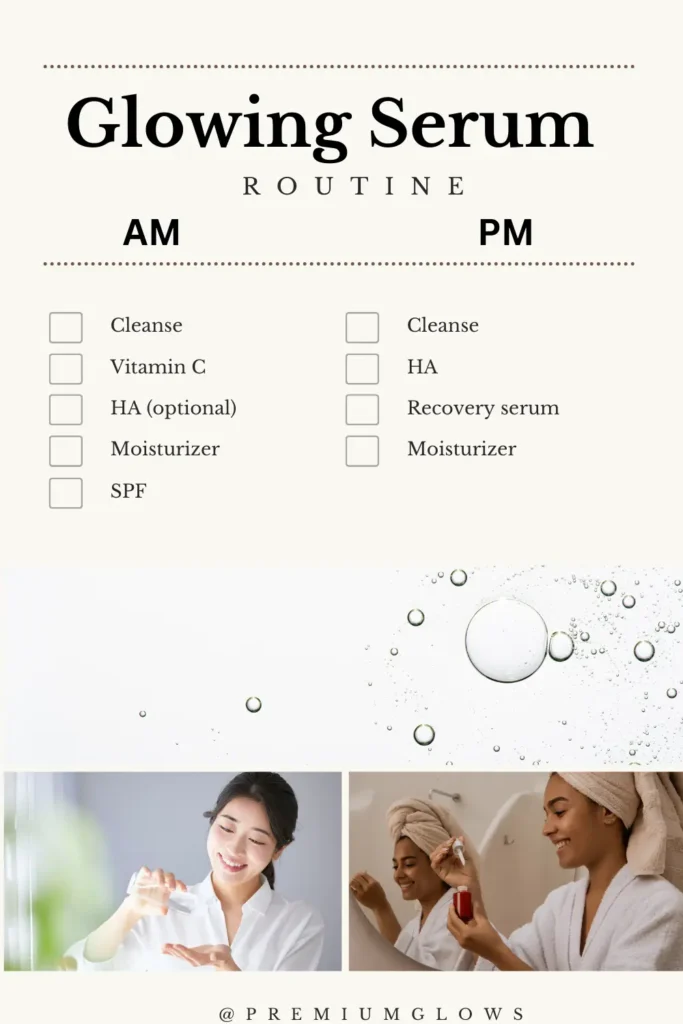
The golden rule: thin to thick. Actives first. Soothing after. And if you’re using stronger actives, don’t stack everything on the same night.
AM Glow Routine (Brighten + Protect)
- Cleanse
- Vitamin C (Vanicream or GlowMedik)
- Hydration (Hyaluronic Acid if needed)
- Moisturizer
- SPF (this is what keeps glow from turning into new spots)
For sensitive skin, choosing the right SPF matters as much as the serum — our best mineral sunscreen for sensitive skin guide has 11 fragrance-free picks that won’t undo your glow.
PM Repair Routine (Smooth + Support)
- Cleanse (double cleanse if you wore makeup/SPF)
- Hydrating serum (HA)
- Recovery glow (medicube PDRN / ANR)
- Moisturizer
PM Texture Routine (2–3 nights/week only)
- Cleanse
- Olay Super Serum or Pacifica Glow Baby (pick one)
- Moisturizer (generous)
Helpful pairing guide: Retinol + Vitamin C Together? (simple, no-confusion routine logic).
What You Can (and Shouldn’t) Mix
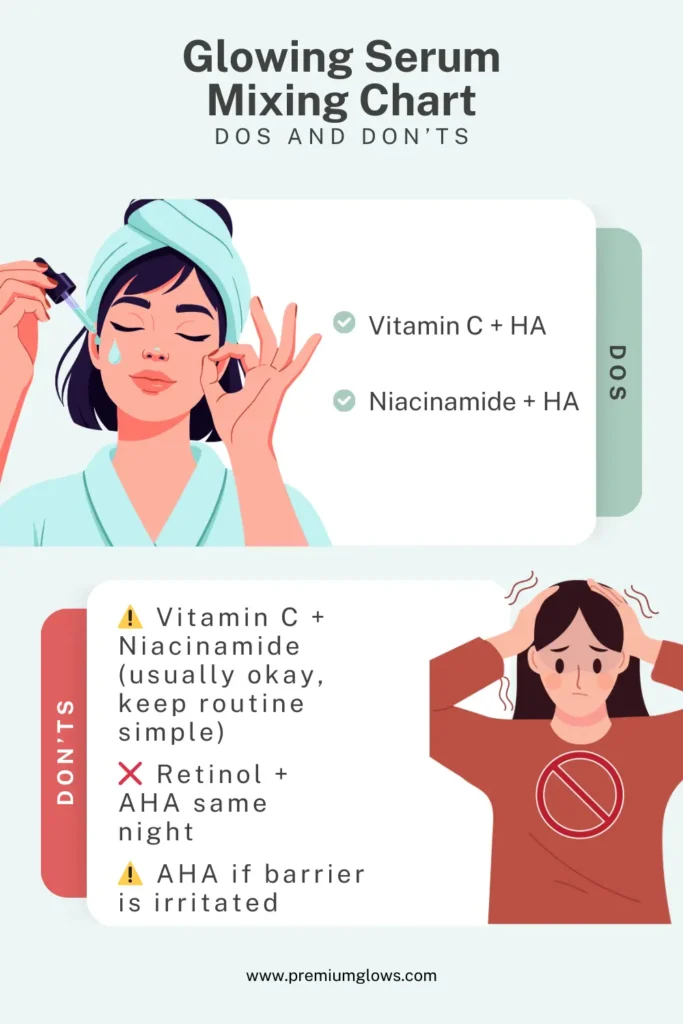
| Combo | Safe? | Best practice |
|---|---|---|
| Vitamin C + Hyaluronic Acid | ✅ Yes | AM glow layering classic |
| Vitamin C + Niacinamide | ✅ Usually | Great for tone + calm glow; keep the routine simple |
| Niacinamide + HA | ✅ Yes | Barrier-friendly, easy daily combo |
| Retinol + AHA/BHA | ❌ Not same night | Alternate nights to avoid irritation |
| AHA (Pacifica/Olay) + Sensitive/compromised skin | ⚠️ Caution | Start slow, moisturize, and stop if stinging persists |
When You’ll See Results (Glow Timeline)
- Hydration glow (HA, plush hydrators): 1–7 days (often immediate)
- Brightening glow (Vitamin C, tone support): ~2–6 weeks
- Texture glow (resurfacing/retinoid routines): ~6–12 weeks
If you’re not seeing glow, it’s usually because the “glow type” doesn’t match your issue (hydration vs dark spots vs texture) or you’re using too many actives too often.
Common Mistakes That Kill Glow
- Over-exfoliating: more actives doesn’t equal more glow—it often equals irritation.
- Skipping moisturizer: even oily skin can look dull when the barrier is thirsty.
- No SPF: dark spots and dullness don’t stand a chance if sunscreen is consistent.
- Changing products too quickly: most real glow takes weeks, not days.
FAQs
What serum gives the best glow?
The best glow serum depends on what “glow” means for your skin: hyaluronic acid for plump hydration glow, Vitamin C for brightening glow, and gentle resurfacing (used carefully) for texture glow.
Can sensitive skin use Vitamin C?
Yes—choose a gentle formula, introduce it slowly (every other morning at first), and follow with moisturizer + SPF. If stinging lasts more than a few minutes, pause and focus on barrier comfort.
Should I use a glow serum in the morning or at night?
It depends on the active. Vitamin C is ideal in the morning (under SPF). Hydrating and recovery serums work AM or PM. Exfoliating/texture serums are best at night and not every night.
Can I use niacinamide with Vitamin C?
Most people can. If you’re prone to sensitivity, keep the routine minimal (cleanser → serum(s) → moisturizer → SPF) and avoid stacking multiple strong actives together.
What if my glow serum stings?
A brief tingle can happen with actives, but burning or persistent stinging is a sign to stop. Switch to a hydration/barrier-focused routine for a few days, then reintroduce slowly (or choose a gentler category).
Do I need moisturizer after serum?
Usually, yes. Moisturizer helps seal in hydration and reduces the chance of irritation—especially if you’re using brightening or resurfacing ingredients.
Next internal links to strengthen your hub: Add 1–2 contextual links from this post to your pillars:
Retinol + Vitamin C Together • Best Vitamin C Serums • Best Hyaluronic Acid Serum • Niacinamide Usage Guide
Leave a Reply