


You’ve got a vitamin C serum in one hand and a retinol in the other… and zero idea if they’re about to transform your skin or destroy your barrier. One TikTok says “never mix them.” Dermatologists say it’s fine “if you do it right.”
The truth sits somewhere in the middle. You can use retinol and vitamin C together in the same skincare routine—but not any way, at any time, on any skin. The right plan depends on your skin type, how sensitive you are, and which formulas you’re using.
In this guide, we’ll break down exactly when it’s safe to use vitamin C and retinol together, the best way to layer them, who should avoid the combo, and a simple AM/PM routine you can copy tonight.
Understanding Retinol and Vitamin C
Before we tackle whether these ingredients play well together, let’s understand what each one brings to the table.
What Is Retinol?
Retinol is a derivative of vitamin A and one of the most researched anti-aging ingredients available. It works by accelerating cell turnover, stimulating collagen production, and unclogging pores. The benefits include:
- Reducing fine lines and wrinkles
- Improving skin texture and tone
- Minimizing the appearance of pores
- Fading hyperpigmentation and dark spots
- Treating acne and preventing breakouts
Looking for affordable formulas that deliver visible results? Explore our guide to the best retinol serums under $30 — tested for real anti-aging effects.
What Is Vitamin C?
Vitamin C (L-ascorbic acid) is a potent antioxidant that protects skin from environmental damage while brightening and evening out skin tone. Its benefits include:
- Brightening dull skin
- Fading dark spots and hyperpigmentation
- Protecting against sun damage and free radicals
- Boosting collagen production
- Reducing inflammation and redness
For a deeper dive into glow-boosting antioxidants, check our updated list of the best vitamin C serums of 2025 — dermatologist-tested and reader-approved.
The Controversy: Why People Think They Don’t Mix
The belief that retinol and vitamin C shouldn’t be used together stems from a few concerns:
pH Levels: Vitamin C works best at a low pH (around 3.5 or lower), while retinol is typically formulated at a higher pH (around 5.5-6). Some believe that using them together could destabilize one or both ingredients.
Irritation: Both ingredients can irritate, especially for sensitive skin. Using them together might increase the risk of redness, dryness, and peeling.
For mature skin, proper hydration makes all the difference — explore our picks for the best moisturizing creams for women over 50 to layer after retinol or vitamin C.
Effectiveness: There’s a theory that the acidic nature of vitamin C could degrade retinol, making it less effective.
The Truth: Yes, You Can Use Them Together
Here’s the good news: modern dermatologists and skincare experts agree that retinol and vitamin C can be used together—you just need to do it correctly. Recent formulation advances have made it easier than ever to combine these ingredients without compromising their effectiveness or irritating your skin.
How to Use Retinol and Vitamin C Together
There are several approaches you can take, depending on your skin type and tolerance:
Method 1: Separate by Time of Day (Recommended for Beginners)
This is the safest and most popular method:
- Morning: Apply vitamin C serum after cleansing, followed by moisturizer and SPF
- Evening: Apply retinol after cleansing, followed by moisturizer
This approach ensures both ingredients work optimally in their ideal environments without interference. Vitamin C provides antioxidant protection during the day when your skin faces UV exposure, while retinol works its magic overnight during your skin’s natural repair cycle.
Method 2: Layer Them in the Same Routine
If your skin tolerates both ingredients well, you can use them in the same routine:
- Cleanse your face thoroughly
- Apply vitamin C serum first (it should be applied to clean skin for maximum absorption)
- Wait 5-10 minutes for it to absorb fully
- Apply retinol
- Follow with moisturizer
The waiting period is crucial—it allows the vitamin C to penetrate at its optimal pH before introducing retinol.
If you’re curious about biotech skincare innovations, don’t miss our roundup of the best exosome serums — next-gen treatments that signal your skin to repair and glow.
Method 3: Alternate Days
For those with sensitive skin or just starting:
- Day 1: Use vitamin C in the morning and evening
- Day 2: Use vitamin C in the morning and retinol in the evening
- Repeat the cycle
This gives your skin time to adjust to both ingredients without overwhelming it.
Tips for Success
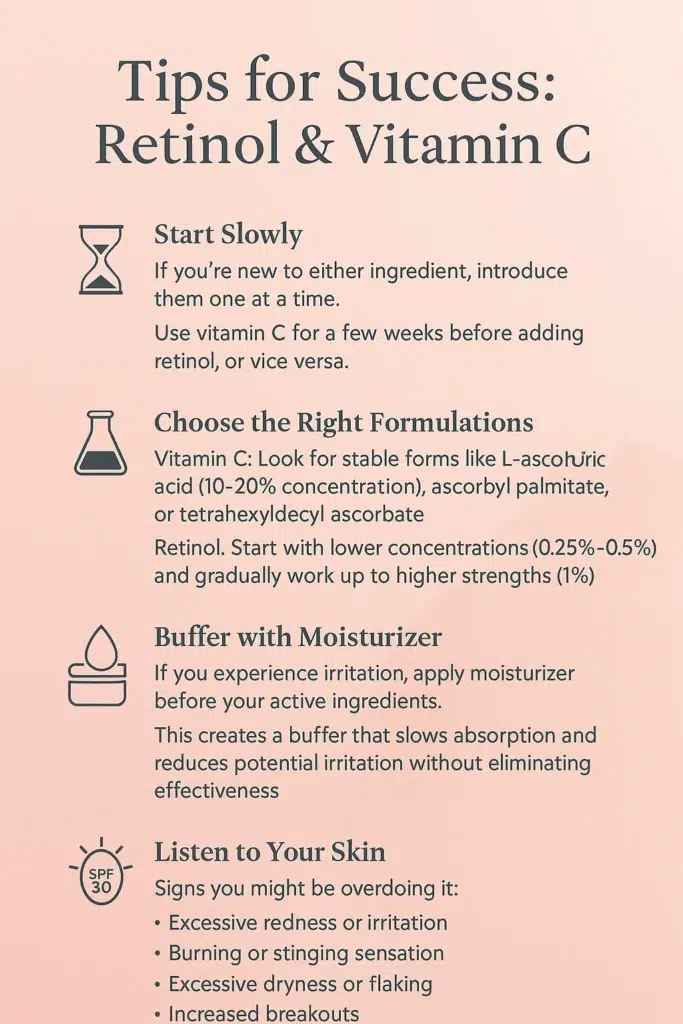
Start Slowly
If you’re new to either ingredient, introduce them one at a time. Use vitamin C for a few weeks before adding retinol, or vice versa. This helps you identify how your skin reacts to each ingredient individually.
Choose the Right Formulations
- Vitamin C: Look for stable forms like L-ascorbic acid (10-20% concentration), ascorbyl palmitate, or tetrahexyldecyl ascorbate
- Retinol: Start with lower concentrations (0.25%-0.5%) and gradually work up to higher strengths (1%)
Buffer with Moisturizer
If you experience irritation, apply moisturizer before your active ingredients. This creates a buffer that slows absorption and reduces potential irritation without eliminating effectiveness.
Never Skip SPF
Both retinol and vitamin C increase sun sensitivity. Always apply a broad-spectrum SPF 30 or higher every morning, regardless of the weather.
Listen to Your Skin
Signs you might be overdoing it:
- Excessive redness or irritation
- Burning or stinging sensation
- Excessive dryness or flaking
- Increased breakouts
If you experience any of these symptoms, scale back your usage or separate the ingredients more.
Best Practices for Different Skin Types
Dry or Sensitive Skin
- Use vitamin C in the morning only
- Apply retinol 2-3 times per week in the evening
- Always use a hydrating moisturizer
- Consider the sandwich method: moisturizer, active ingredient, moisturizer
Oily or Acne-Prone Skin
- Can tolerate more frequent application
- Use vitamin C every morning
- Use retinol 3-5 times per week in the evening
- Look for lightweight, non-comedogenic formulations
Normal or Combination Skin
- Use vitamin C every morning
- Use retinol 4-6 times per week in the evening
- Adjust based on how your skin responds
Mature Skin
- Can typically handle both ingredients daily
- Use higher concentrations as tolerated
- Focus on hydration to prevent dryness
- May benefit from layering in the same routine
What to Expect: Timeline and Results
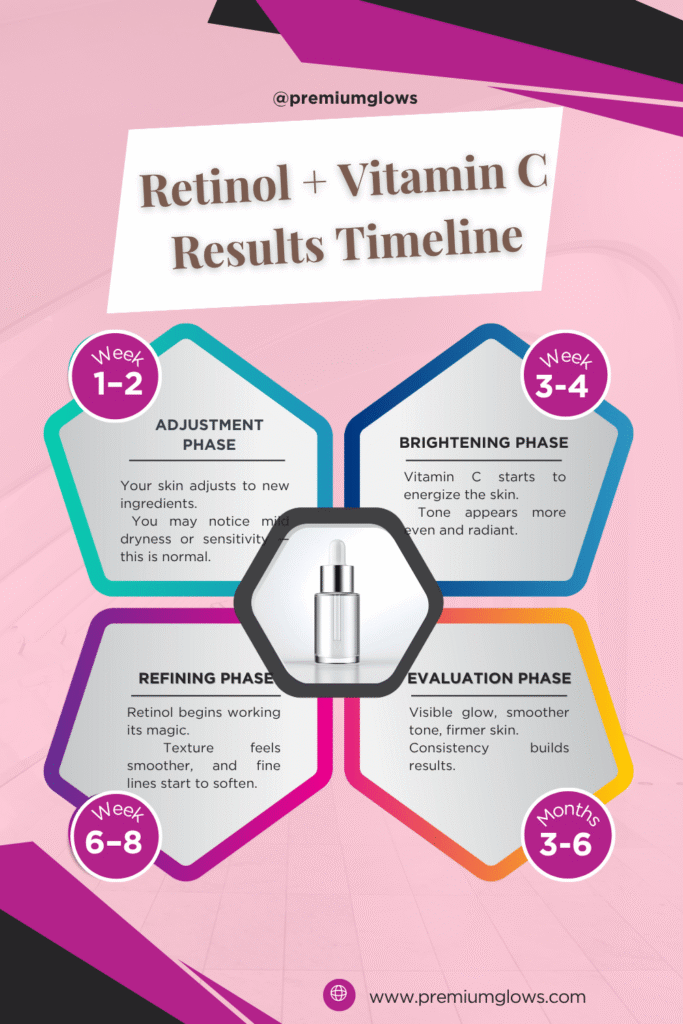
Weeks 1-2: Your skin adjusts to the ingredients. You might experience some dryness or mild irritation.
Weeks 3-4: Skin begins to look brighter and more even-toned from the vitamin C.
Weeks 6-8: Retinol starts showing results—smoother texture and reduced fine lines.
Months 3-6: Significant improvements in skin tone, texture, and signs of aging become visible.
Remember, skincare is a marathon, not a sprint. Consistency is key to seeing real results.
Pairing actives with a nourishing night cream helps minimize irritation and boost results. Try one from our curated list of the best anti-aging night creams for smoother overnight recovery.
Common Mistakes to Avoid

Using Too Much Product: A pea-sized amount of retinol and a few drops of vitamin C are sufficient.
Applying to Damp Skin: This can increase irritation. Always apply to dehydrated skin.
Mixing in Your Palm: Don’t mix the products before applying—layer them correctly.
Forgetting Sunscreen: This is non-negotiable when using these ingredients.
Not Patch Testing: Always test new products on a small area first.
If you’re also using a salicylic acid cleanser or toner, it helps to think about your actives over the whole week, not just one routine. I have a separate guide on using salicylic acid and retinol together that explains when to layer them, when to separate them, and how to avoid the over-exfoliation trap.
When to Avoid Using Them Together
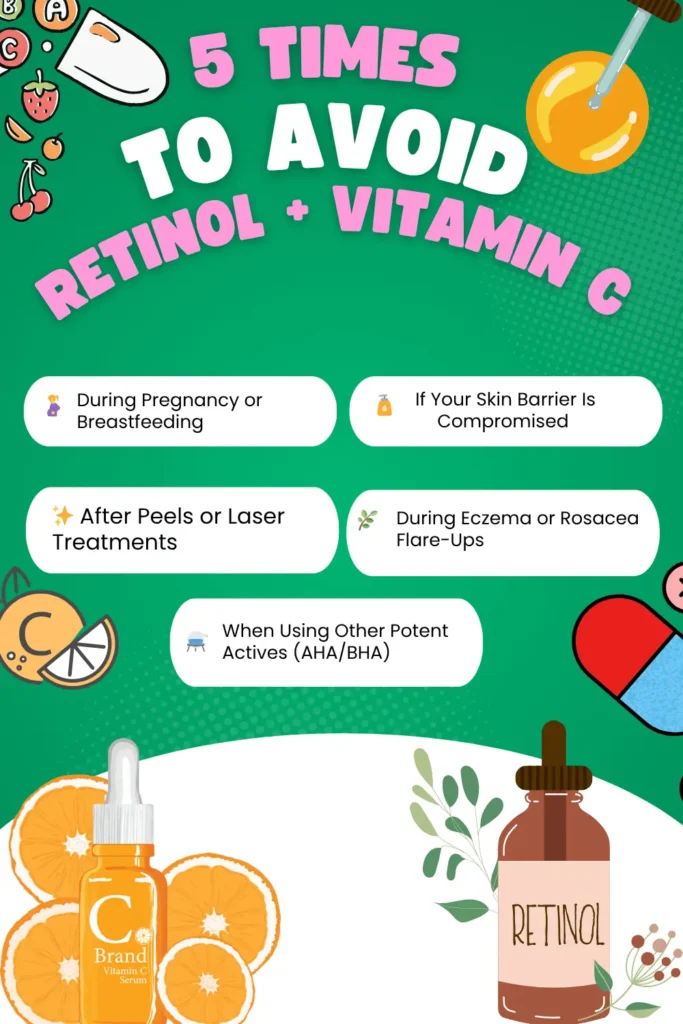
During pregnancy, after treatments, or when your skin barrier is stressed.
Protect your glow — consistency matters more than overuse.
While most people can use retinol and vitamin C together, there are situations where you should proceed with caution or avoid it:
- During pregnancy or breastfeeding (consult your doctor about retinol use)
- If you have a severely compromised skin barrier
- Immediately after procedures like chemical peels or laser treatments
- If you have active eczema or rosacea flare-ups
- When using other potent actives like AHAs or BHAs
Product Recommendations
When choosing products, look for:
Vitamin C Serums:
- Stable formulations in opaque, airtight packaging
- Concentrations between 10-20%
- Additional antioxidants like vitamin E and ferulic acid
Retinol Products:
- Encapsulated or time-release formulations for sensitive skin
- Concentrations starting at 0.25% for beginners
- Soothing ingredients like niacinamide or ceramides
To complete your skincare routine, seal in hydration with one of the best hyaluronic acid serums that lock in moisture without disrupting actives.
FAQs: Using Retinol and Vitamin C Together
Can I use retinol and vitamin C together?
Yes. You can safely use retinol and vitamin C together as long as you introduce them slowly and pay attention to your skin’s tolerance. Many dermatologists now recommend pairing vitamin C in the morning with retinol at night for brighter, smoother, and more even-toned skin over time.
Should I use vitamin C or retinol first?
If you’re layering them in the same routine, apply vitamin C serum first on clean, dry skin, wait 5–10 minutes for it to absorb, and then apply retinol followed by moisturizer. For most people, the easiest method is vitamin C in the morning and retinol at night so each ingredient can work in its ideal environment.
Can I use retinol and vitamin C if I have sensitive skin?
Yes, but go slowly and simplify the rest of your routine. Start with vitamin C in the morning and use retinol just 1–2 nights per week, using the “sandwich method” (moisturizer → retinol → moisturizer). Avoid harsh scrubs and strong acids until your skin barrier feels calm and comfortable.
How often can I use retinol and vitamin C together?
Most people can use vitamin C daily in the morning and retinol 2–4 nights per week at first, then gradually increase retinol to 4–6 nights as your skin adjusts. If you notice stinging, redness, or flaking, cut back the frequency or separate them by day until your skin settles.
What should I avoid mixing with retinol and vitamin C?
Be cautious about combining retinol and vitamin C with other strong actives like high-percentage AHAs, BHAs, and harsh physical exfoliants in the same routine. Over-layering strong ingredients can lead to over-exfoliation, irritation, and a damaged skin barrier.
Do I need sunscreen if I use retinol and vitamin C?
Absolutely. Daily broad-spectrum SPF 30 or higher is non-negotiable when using either retinol or vitamin C. These ingredients can make your skin more sensitive to the sun, and unprotected UV exposure will undo many of their brightening and anti-aging benefits.
Can I use retinol and vitamin C while pregnant or breastfeeding?
Vitamin C is generally considered safe, but topical retinoids are usually not recommended during pregnancy or breastfeeding. Always speak with your doctor or dermatologist before using retinol or any strong active ingredient if you are pregnant, trying to conceive, or nursing.
How long does it take to see results from retinol and vitamin C?
You may notice a brighter, more even tone from vitamin C within 3–4 weeks and smoother texture and softer fine lines from retinol after 6–8 weeks of consistent use. Deeper anti-aging results often appear between 3–6 months, depending on your skin type, product strength, and routine consistency.
The Bottom Line
Used correctly, retinol and vitamin C are one of the most powerful pairs in modern skincare—vitamin C brightens and protects, while retinol smooths, renews and firms over time.
Start with the easiest option (vitamin C in the morning, retinol at night), listen to your skin, and keep your SPF non-negotiable. Once your barrier is happy, you can play with alternating nights or advanced layering.
If you’re building a full anti-aging routine, your next reads might help:
Link to: best night creams for anti-aging (to pair with retinol)
Link to: benefits of salicylic acid (for breakout-prone skin)
Link to: bakuchiol vs retinol (gentler alternative)
Have you tried using retinol and vitamin C together? Share your experience in the comments below!
Leave a Reply