

Niacinamide, also known as vitamin B3, is a powerful ingredient that offers a multitude of benefits for skin health. This water-soluble vitamin plays a key role in retaining moisture and enhancing the skin’s protective barrier.
As a result, it promotes healthier, more resilient skin. Recently, niacinamide has gained a lot of attention, particularly among women over 40, because of its ability to address aging skin’s challenges.
The main reason Niacinamide has gained significant popularity because of its versatility in skincare. It provides more than just hydration, effectively addressing skin concerns such as dryness, uneven tone, fine lines, and enlarged pores.
Additionally, its anti-inflammatory properties make niacinamide particularly beneficial for sensitive or acne-prone skin. It helps to soothe irritation while regulating sebum production, ultimately promoting clearer skin.
But there’s more. Niacinamide also works wonders in improving skin texture and firmness. As we age, our skin loses collagen and elastin, leading to sagging and wrinkles.
Adding niacinamide to your skincare routine can help increase the production of essential proteins, improving skin elasticity and giving it a firmer, more youthful look.
Additionally, niacinamide helps reduce hyperpigmentation by inhibiting melanin production, leading to a more even and radiant skin tone.
Niacinamide’s ability to address multiple skin concerns has made it a popular ingredient in products ranging from serums to moisturizers. It is an excellent choice for women looking to enhance their skin health, especially as they embrace the natural changes that come with aging.
Key Benefits of Niacinamide for Women Over 40
As we age, skin undergoes noticeable changes. For women in their 40s, fine lines, uneven skin tone, and loss of elasticity are common concerns. The skin’s natural regenerative process slows, resulting in dryness, dark spots, and dullness. At this stage, niacinamide becomes a must-have in skincare routines.
One of niacinamide’s most essential roles is strengthening the skin’s barrier. This becomes crucial as we age because a more substantial barrier helps lock in moisture and protect the skin from environmental stressors. It also reduces transepidermal water loss, a key factor contributing to dryness and a lackluster complexion.
Niacinamide also addresses hyperpigmentation, which many women experience because of hormonal changes. Increased melanin production can lead to dark patches, but niacinamide can help curb this process, promoting a brighter, more even skin tone.
Fine lines and wrinkles are another issue that women over 40 often face. Niacinamide stimulates collagen production, essential for maintaining skin firmness and elasticity. By incorporating niacinamide into your daily skincare routine, you can expect a reduction in the appearance of these lines and an overall improvement in skin texture.
For women looking to maintain youthful, radiant skin, niacinamide is indispensable. Its ability to improve skin texture, tone, and elasticity makes it a key player in the fight against aging.
The Benefits You Can’t Miss
Niacinamide, or nicotinamide, is packed with benefits that extend beyond just enhancing skin appearance. Let’s take a closer look at some of its most remarkable qualities:
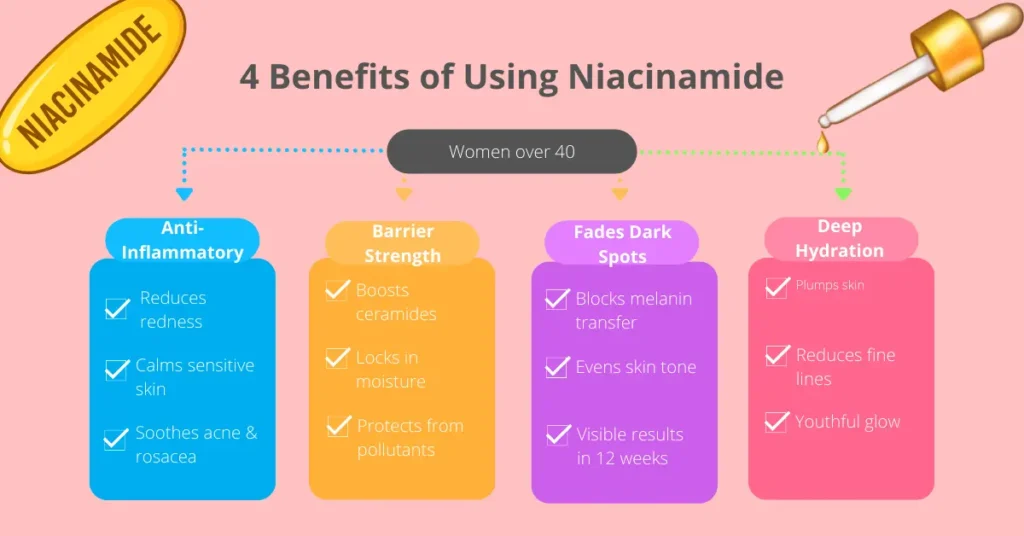
Anti-inflammatory properties: Niacinamide is particularly beneficial for those dealing with conditions like rosacea or acne. Research has shown that it can reduce redness and irritation, helping to calm sensitive skin.
Improving the skin barrier: Niacinamide promotes the production of ceramides, lipids that are crucial for retaining moisture and keeping the skin’s structure intact.
A strong skin barrier prevents pollutants from penetrating and helps avoid dryness and eczema. Clinical studies have shown that niacinamide strengthens the skin barrier, leading to smoother and healthier-looking skin.
Fighting hyperpigmentation: Niacinamide is also highly effective in combating hyperpigmentation. By inhibiting melanin transfer to skin cells, it can help fade dark spots and even out your skin tone. In fact, after just 12 weeks of regular use, many users report visible improvements in pigmentation.
Hydration boost: Niacinamide helps the skin retain moisture, giving it a plumper, more youthful appearance. Many women over 40 find that adding niacinamide to their routine helps refresh their skin, offering long-lasting hydration that combats the effects of aging.
Niacinamide is a transformative ingredient in skincare. It does more than just improve appearance; it enhances skin function.
How Often Should You Use Niacinamide?
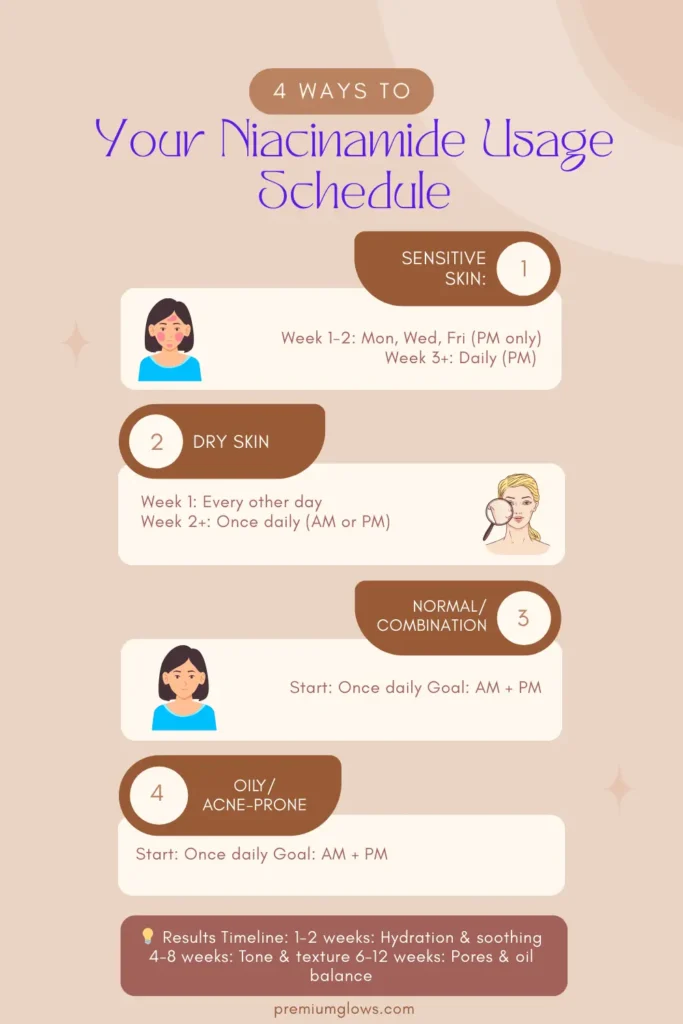
If your skin tolerates it well, niacinamide can be used daily—and many people do best with AM + PM for steady barrier support, smoother texture, and a more even-looking tone. It’s considered one of the more “easy to live with” actives, with low irritation risk at typical strengths.
The sweet spot for most routines: 2–5% for daily barrier + glow, and 5–10% if you’re targeting visible pores, oiliness, or uneven tone (as long as your skin stays calm). If you notice stinging or tightness, drop to a lower % or reduce frequency—your skin will get better results from consistency than intensity.
| Skin type / concern | Best starting frequency | Goal frequency |
|---|---|---|
| Sensitive / redness-prone | 2–3 nights/week | Once daily (PM) if tolerated |
| Dry / barrier-compromised | Every other day | Once daily (AM or PM) |
| Normal / combination | Once daily | AM + PM |
| Oily / acne-prone | Once daily | AM + PM |
When you’ll see results: hydration + soothing often shows up in 1–2 weeks. Tone and texture changes are usually clearer around 4–8 weeks, and stubborn-looking pores/oil balance can take 6–12 weeks of steady use. Clinical studies also show improvements in hyperpigmentation over weeks with consistent application.
Incorporating Niacinamide Into Your Skincare Routine
For women over 40, adding niacinamide to their skincare routine can work wonders for their skin. Niacinamide is a versatile ingredient. It suits any skin type and works well with other skincare products to enhance results. Here’s how to get the most out of niacinamide:
Serums: A serum is one of the most effective ways to introduce niacinamide into your routine. Serums have a lightweight texture that allows the active ingredients to penetrate deeply into the skin.
Look for serums with a concentration of 5% to 10% niacinamide, which provide optimal benefits without causing irritation. Apply the serum after cleansing and toning, both morning and evening.
Moisturizers: Niacinamide-infused moisturizers are also an excellent choice. These products not only deliver the benefits of niacinamide but also offer much-needed hydration.
You can use them on their own or layer them over a serum for added benefits. For maximum effectiveness, look for moisturizing products that focus on hydration or skin repair.
Layering with other ingredients: Niacinamide pairs well with several other skincare ingredients. For instance, combining niacinamide with hyaluronic acid enhances hydration, making your skin look plumper and more youthful. It also works well with antioxidants like vitamin C, which brightens the skin and evens out tone. However, to avoid potential conflicts, it’s best to use these ingredients at different times of the day.
Consistency is key: The key to getting the best results from niacinamide is consistency. Start by gradually adding it into your routine and allow your skin to adjust. Over time, you’ll notice a significant improvement in texture, tone, and overall skin health.
Side Effects and Precautions
Niacinamide is generally safe for most people, but there are a few potential side effects to watch out for. Skin irritation, like redness, itching, or a burning sensation, is one of the most common issues. This is particularly important for people with sensitive skin or conditions such as rosacea or eczema.
To prevent irritation, it’s essential to do a patch test before fully adding niacinamide to your skincare routine. Apply a small amount to an area of skin that isn’t visible and wait 24 to 48 hours. This will help you check your skin’s reaction.
In rare cases, niacinamide can cause allergic reactions. If you experience symptoms like intense itching, swelling, or hives, stop using niacinamide immediately. Consult a dermatologist for further advice.
Additionally, if you’re using other active ingredients like retinoids or exfoliants, be cautious. Strong actives can increase skin sensitivity, so plan your skincare routine carefully.
Before starting any new treatment, it’s always a good idea to speak with a skincare professional. A dermatologist can offer personalized advice tailored to your skin type and concerns. This ensures that niacinamide benefits your skin health without causing any unwanted side effects.
Pairing B3 With Other Actives
Niacinamide is a versatile ingredient that works well when combined with other active skincare ingredients. Here’s how it pairs with some of the most popular ones:
Hyaluronic Acid: Known for its powerful hydrating properties, hyaluronic acid helps the skin retain moisture, plumping it up and reducing dryness. When combined with niacinamide, the duo strengthens the skin’s barrier, boosting hydration and helping protect against environmental stressors. This combination is especially beneficial for women over 40, as it promotes a more youthful appearance.
Retinol is a powerful anti-aging ingredient that boosts cell turnover and reduces fine lines and wrinkles. However, it can be irritating for sensitive skin. Adding niacinamide helps soothe the skin, reducing irritation and allowing you to experience the benefits of retinol without discomfort.
Vitamin C: Vitamin C is renowned for its ability to brighten the skin and combat hyperpigmentation. When combined with niacinamide, it stabilizes vitamin C’s effectiveness and enhances its antioxidant properties. This pairing helps brighten the skin and even out tone, making it a great option for women over 40.
By combining niacinamide with other key ingredients, you can create a customized skincare routine that targets multiple skin concerns. Women over 40, in particular, can benefit from this approach as it addresses aging skin’s diverse needs.
Real-Life Success Stories
Many women over 40 have noticed remarkable improvements in their skin after adding niacinamide to their daily routine.
Take Helen, 45, for example. She struggled with uneven skin tone and dullness. After using a niacinamide serum twice a day, she saw a significant reduction in redness and a brighter complexion. Within weeks, her skin appeared more youthful and radiant, boosting her confidence, even without makeup.
Linda, 52, had long been concerned about enlarged pores and fine lines. After adding a niacinamide moisturizer to her routine, she saw improvements in both areas. Fine lines were less visible, and her pores appeared more refined. Linda now enjoys smoother skin and feels inspired to experiment with new beauty looks.
Maria, 60, faced dryness and sunspots. After using a niacinamide-infused cream, she saw a gradual improvement in both hydration and the appearance of sunspots. Now, Maria relies on niacinamide to maintain her skin’s health, embracing her natural beauty with confidence.
FAQ
Q: How often should I use niacinamide for best results?
Use it twice daily (AM + PM) if your skin tolerates it. If you’re sensitive, start every other day for 1–2 weeks, then increase to daily.
Q: What concentration should I choose—2%, 5%, 10%?
For everyday use and barrier support, 2–5% is ideal. For visible pores, oil, or uneven tone, up to 10% can help. Higher than 10% offers diminishing returns and may increase irritation.
Q: Morning or night—when is niacinamide most effective?
Both. AM helps with oil balance and environmental stressors; PM supports repair and barrier strength. Always finish AM with SPF 30+.
Q: How long until I see results?
Hydration/soothing: 1–2 weeks. Tone and texture: 4–8 weeks. Pores and oil balance: 6–12 weeks with consistent use.
Q: Can I combine niacinamide with vitamin C, retinol, or acids?
Yes. It pairs well with vitamin C (brightening AM), retinol (comforting PM), and AHA/BHA (use on alternate nights or layer hydrating steps to buffer).
Q: Where does it go in my routine?
After cleanse/toner, apply niacinamide serum, then moisturizer, then sunscreen (AM). If using multiple actives, apply from thinnest to thickest textures.
Q: Will niacinamide cause purging or breakouts?
Purging is uncommon. If you notice persistent irritation or new breakouts, reduce frequency, simplify actives, and re-introduce slowly.
Q: Is niacinamide safe for sensitive or redness-prone skin?
Generally yes—choose 2–5% and introduce slowly. Patch test first and avoid layering with too many strong actives at once.
Q: Can I use niacinamide with prescription treatments?
Often yes, but keep it simple: apply niacinamide to support the barrier and sandwich stronger topicals with moisturizer. Follow your prescriber’s guidance.
Q: Is niacinamide safe during pregnancy or breastfeeding?
Topical niacinamide is generally considered safe, but always check with your healthcare provider.
Q: What if my skin stings or feels tight after application?
Scale back to once daily or every other day, switch to a lower percentage.
Leave a Reply